
1838 Proof Half Dollar Pattern - J-80
Strike Type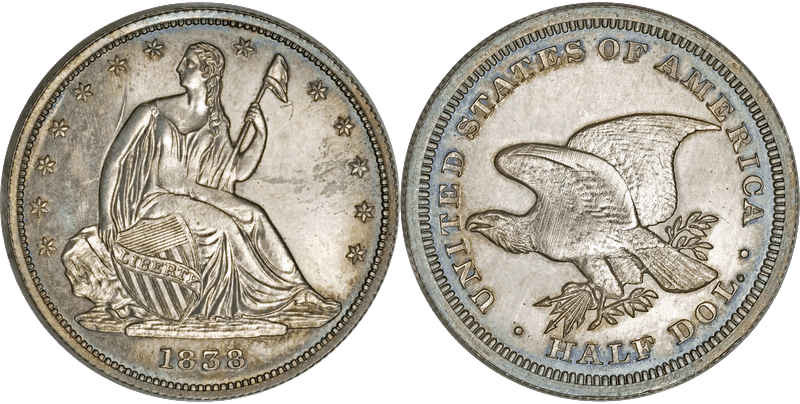
Coin Details
Auction Record
$43,200 PR65 02-25-2021 Heritage Auctions
Description
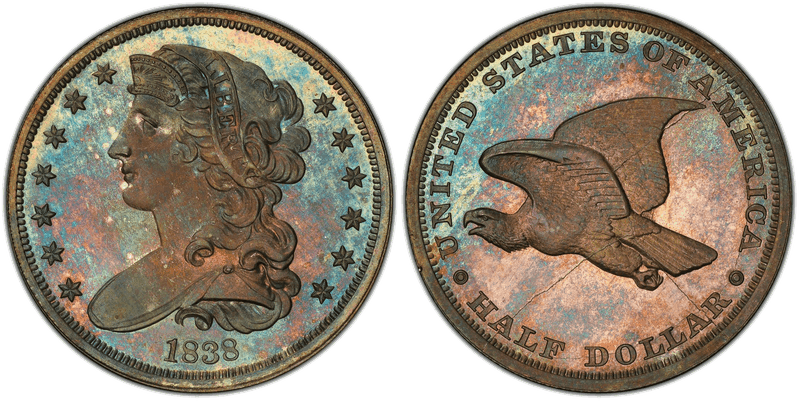
Cataloged as Judd-80 (Pollock-87) and rated High R.7, this silver half dollar pattern is widely regarded as one of the most beautiful and mysterious entries in the 1838 pattern series. The obverse presents a modified version of the Seated Liberty design, with a larger rock, differently spaced stars, and rearranged drapery compared to the standard version. LIBERTY appears incused on the scroll, with the date in the exergue. The reverse features what collectors have termed the "defiant eagle," a powerful bird clutching an olive branch and six arrows (notably more than the typical four), with UNITED STATES OF AMERICA above and HALF DOL. Below. Struck in silver with a reeded edge. Despite bearing an 1838 date, experts universally agree that Judd-80 is a restrike produced long after that year. The reverse die may not have even been completed until the late 1860s or early 1870s. A. Loudon Snowden, upon assuming the role of chief coiner, reportedly found a cache of dies and hubs that included what he described as particularly beautiful half dollar work by Gobrecht. A hub trial of the Judd-80 reverse eagle survives in the Smithsonian's National Numismatic Collection as Pollock-3058, and the hub itself still exists. The coin was entirely undocumented before 1875, when it first appeared at auction in the Cohen Collection sale, described by Edward Cogan as a variety that had "never before been offered at auction" with "only two or three known to exist." Dealer John W. Haseltine purchased that lot for $10.50, and intriguingly, the first auction appearance of the copper version (Judd-81) occurred in a Haseltine sale just two years later, raising the possibility that Haseltine used his Mint connections to obtain additional strikings. Current estimates place the surviving population at three or four pieces, remarkably close to Cogan's original assessment from over a century ago.
External References
Error Varieties
No listings found
This category doesn't have any child listings yet.
Other Strike Types in This Series
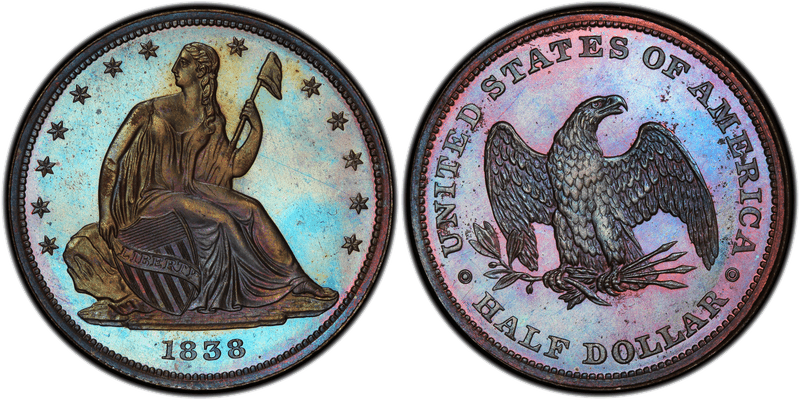
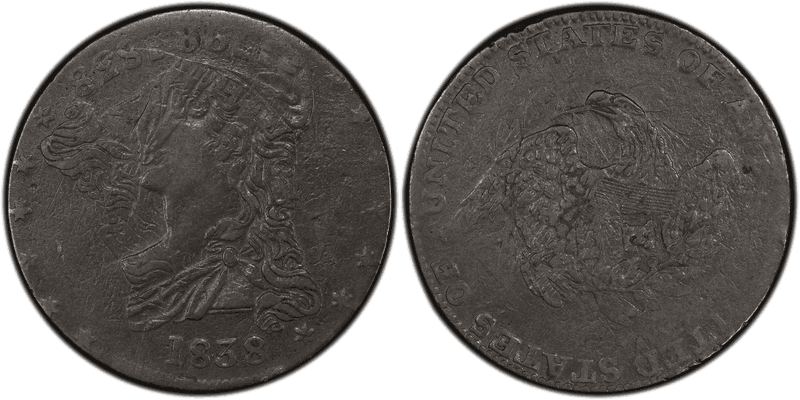
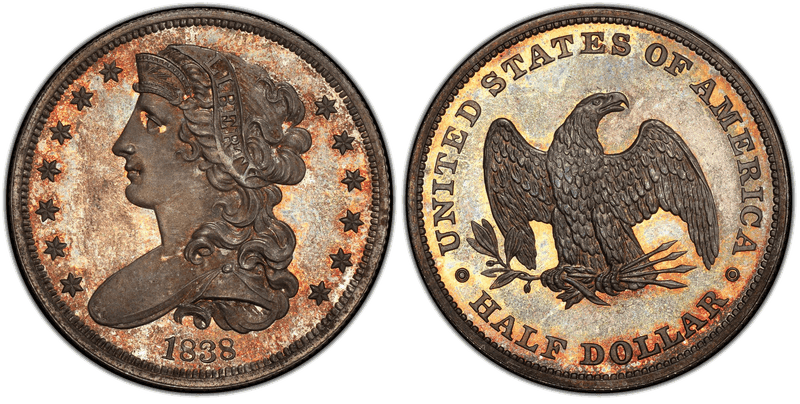
Collector Essentials
Tools and references for building and protecting your coin collection.
10x-20x Jeweler's Loupe
A must-have for examining coin details, mint marks, and surface quality
Red Book — Guide to U.S. Coins
The essential annual reference for U.S. coin values, history, and mintages
Coin Albums & Storage
Archival-quality albums and holders to protect and display your collection
USB Digital Microscope
Capture detailed images for documentation and community submissions
As an Amazon Associate, NumisDex earns from qualifying purchases.