
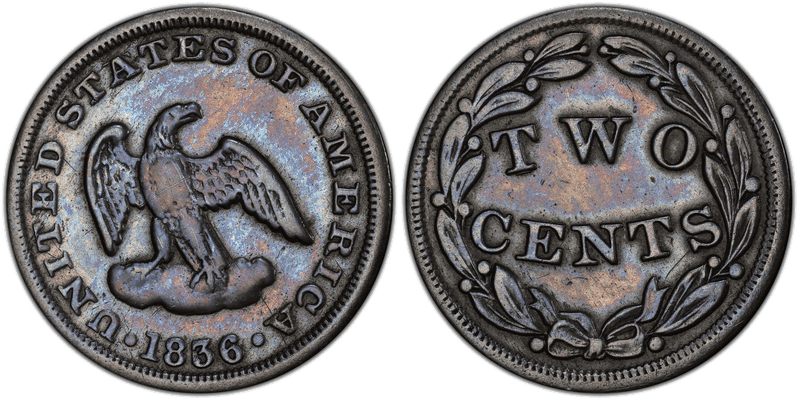
1836 Two Cent Pattern - J-52
Strike Type
Coin Details
Description
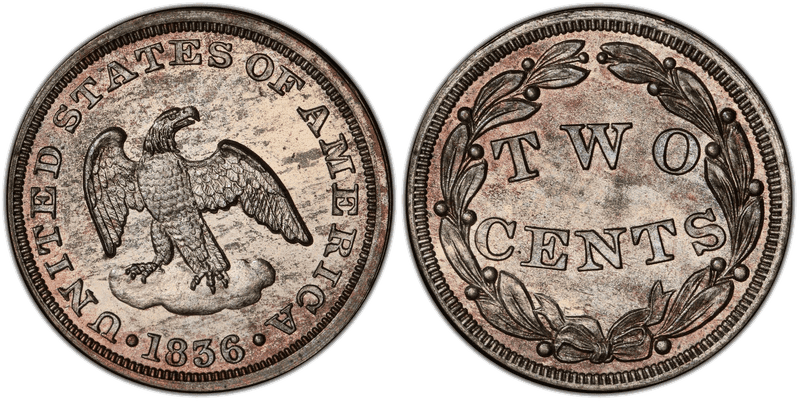
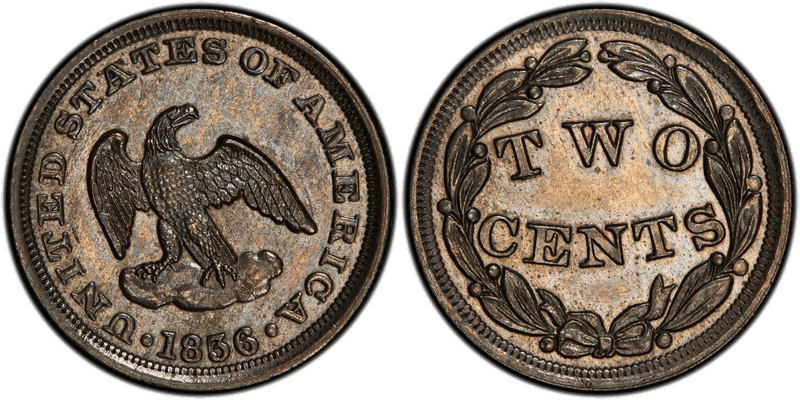
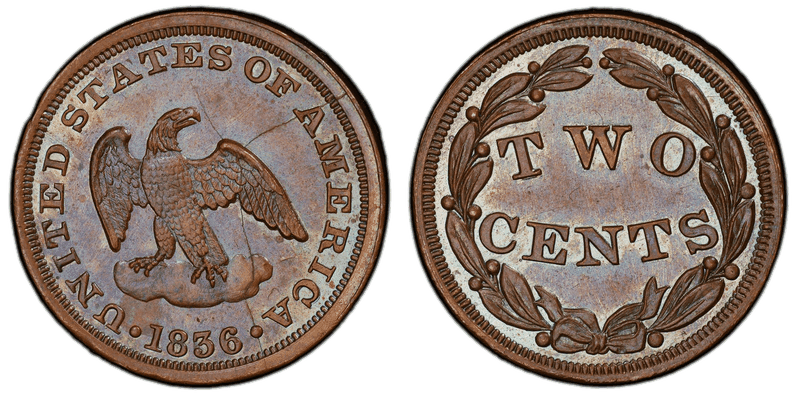
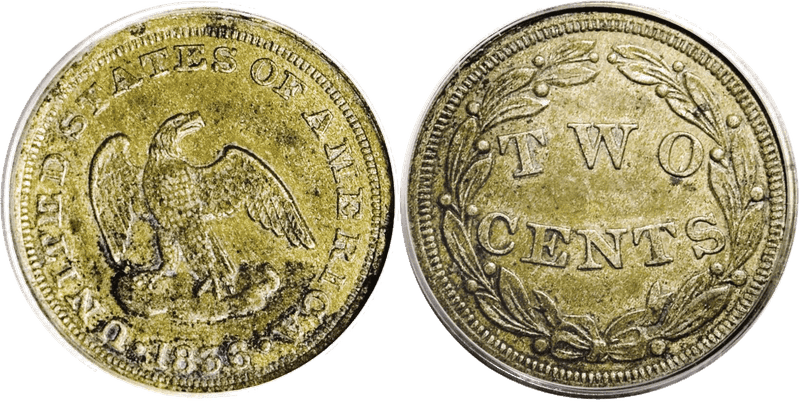
Judd-52 is an early two-cent denomination pattern from 1836, predating the adopted two-cent piece of 1864 by nearly three decades. The concept of a two-cent coin was proposed multiple times throughout the antebellum period as a means of improving transactional efficiency — reducing the number of individual cents needed for small purchases while filling the gap between the cent and the half dime. The obverse features a Liberty Head design consistent with the coinage aesthetics of the Jacksonian era, while the reverse displays the denomination within a wreath. The specific design elements reflect Chief Engraver William Kneass's work, as he served in that capacity from 1824 until his incapacitating stroke in 1835, after which Christian Gobrecht assumed most engraving duties. The 1836 date places this pattern squarely in the transitional period between these two influential engravers. Though the two-cent denomination would not be realized until the Civil War created acute small-change shortages, this 1836 pattern demonstrates that the Mint was thinking about denominational reform well before that crisis. The piece exists as a testament to the ongoing dialogue between Mint officials and Congress about the optimal structure of American coinage. Pattern coins of proposed new denominations carry particular historical weight because they represent ideas that were seriously considered but not yet adopted, offering a window into alternative monetary histories that was.
Rarity Notes
R.6 to R.7. Very rare. Estimated 8-12 specimens survive.
Cross References
Judd-52
External References
Error Varieties
No listings found
This category doesn't have any child listings yet.
Other Strike Types in This Series
Collector Essentials
Tools and references for building and protecting your coin collection.
10x-20x Jeweler's Loupe
A must-have for examining coin details, mint marks, and surface quality
Red Book — Guide to U.S. Coins
The essential annual reference for U.S. coin values, history, and mintages
Coin Albums & Storage
Archival-quality albums and holders to protect and display your collection
USB Digital Microscope
Capture detailed images for documentation and community submissions
As an Amazon Associate, NumisDex earns from qualifying purchases.