
1831 C. Bechtler One Dollar Gold Piece - 30 Grains, Reeded Edge
Strike Type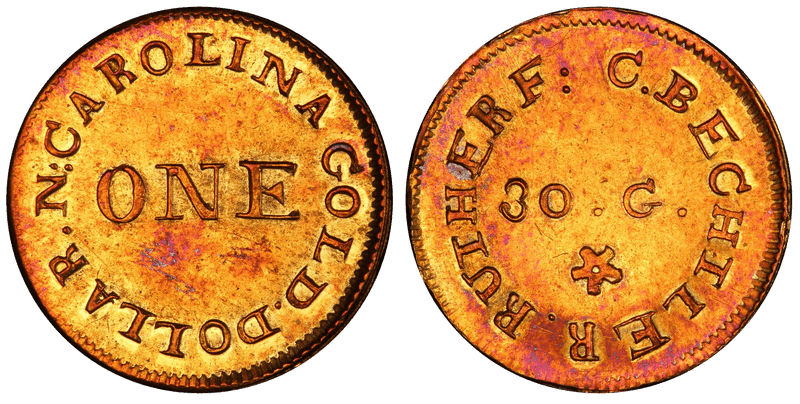
Coin Details
Auction Record
$43,200 MS63 01-16-2022 Heritage Auctions
Description
The 1831 Christopher Bechtler One Dollar Gold Piece with 30 grains and reeded edge is the first gold dollar denomination produced by any mint operating within the United States. Christopher Bechtler, a German-born goldsmith who emigrated from the Grand Duchy of Baden to Rutherfordton, North Carolina around 1830, established a private mint to serve the gold mining communities of the Carolina Piedmont region. His gold dollars preceded the United States Mint's own gold dollar denomination by nearly two decades, as Congress did not authorize federal gold dollars until the Act of March 3, 1849. This variety contains 30 grains of gold and features a reeded edge as a security measure against clipping. The obverse displays "CAROLINA GOLD" with "30.G" indicating the gold weight in grains, while the reverse shows "ONE DOLLAR" with "C. BECHTLER" identifying the issuer. The gold used was mined locally from the rich deposits in Rutherford, Burke, and surrounding counties of western North Carolina, which constituted America's primary gold-producing region before the California Gold Rush of 1849. Christopher Bechtler's mint operated with remarkable integrity. His coins were consistently accurate in their stated gold content, and many circulated alongside federal coinage without difficulty. The 30-grain gold dollar represents the earliest weight standard Bechtler used for this denomination before reducing it to 28 grains around 1834.
Rarity Notes
Scarce. Estimated 30-50 surviving examples from an undocumented but significant original mintage. Among the earliest private gold dollars struck in the United States.
Cross References
Kagin K-1; PCGS #10064; NGC #31021
External References
Error Varieties
No listings found
This category doesn't have any child listings yet.
Other Strike Types in This Series
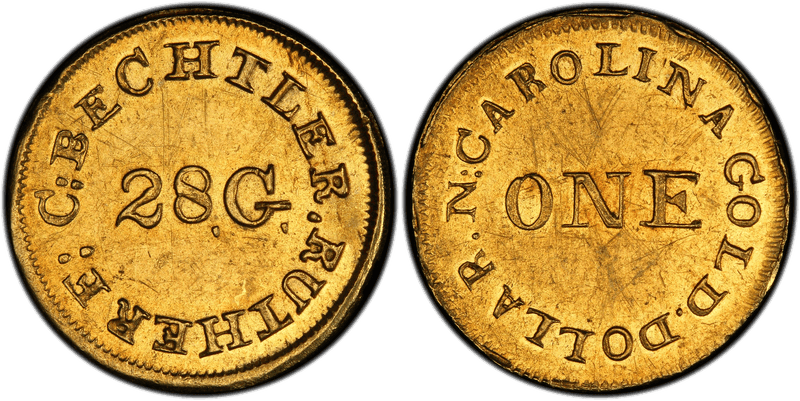
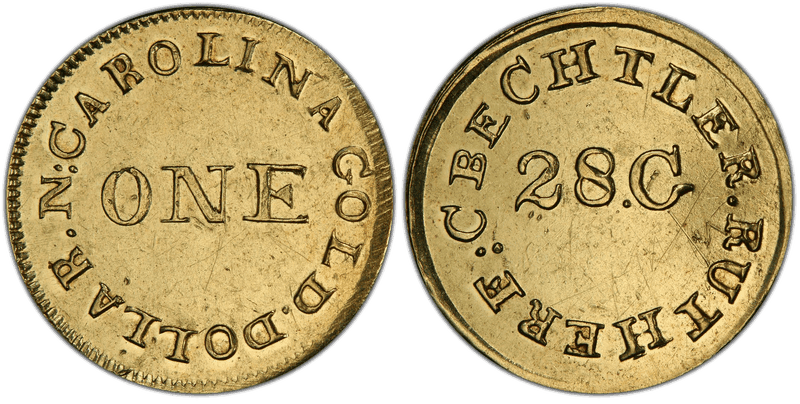
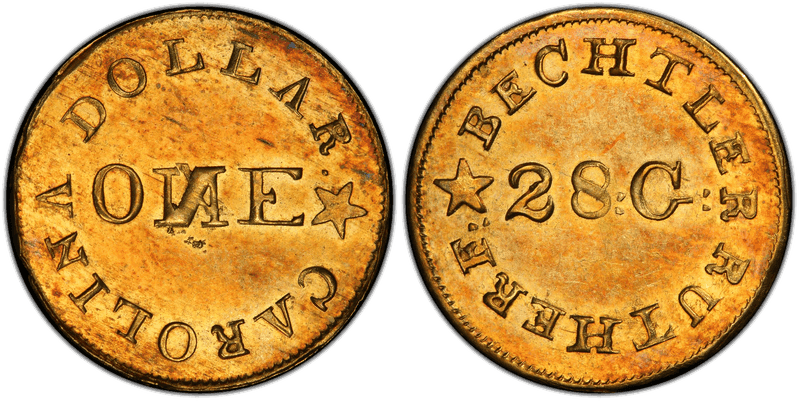
Collector Essentials
Tools and references for building and protecting your coin collection.
10x-20x Jeweler's Loupe
A must-have for examining coin details, mint marks, and surface quality
Red Book — Guide to U.S. Coins
The essential annual reference for U.S. coin values, history, and mintages
Coin Albums & Storage
Archival-quality albums and holders to protect and display your collection
USB Digital Microscope
Capture detailed images for documentation and community submissions
As an Amazon Associate, NumisDex earns from qualifying purchases.