
1818 Cent Pattern - Perkins, J-C1818-1
Strike Type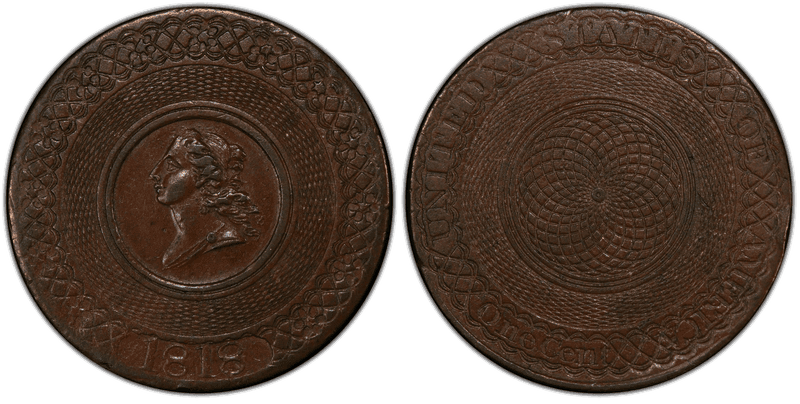
Coin Details
Description
The 1818 Perkins Private Pattern cent, cataloged as Judd-C1818-1, is an experimental coin produced by Jacob Perkins, the prolific Massachusetts-born inventor and engraver who pioneered steel die technology for both coinage and banknote printing. Perkins had developed a hardened steel die process that he believed offered superior durability and anti-counterfeiting properties compared to the softer copper dies then used at the United States Mint. This one-cent pattern was part of Perkins's campaign to demonstrate the advantages of his steel-die engraving system to government authorities. The piece showcases the fine detail and crisp lettering that steel dies could produce, qualities that Perkins argued would make counterfeiting far more difficult. His proposals to the Mint were ultimately not adopted for regular coinage, though his steel-die technology proved transformative in the banknote printing industry, where it was widely adopted through the firm of Perkins, Fairman & Heath (later becoming part of the American Bank Note Company). Perkins relocated to England in 1819, where he found greater success selling his steel-engraving technology to the Bank of England for use on British banknotes. The 1818 pattern cent thus represents one of his final American-made demonstration pieces, produced in the period immediately before his permanent departure for Europe. The coin is classified among territorial and private mint issues despite being a pattern proposal for federal coinage, reflecting its non-governmental origin.
Rarity Notes
Extremely rare. Perkins pattern cents were produced in very limited quantities as demonstration pieces. Fewer than a dozen examples survive. Most known pieces reside in institutional collections.
Cross References
PCGS #893828; Judd C1818-1
External References
Error Varieties
No listings found
This category doesn't have any child listings yet.
Related Strike Types in This Denomination
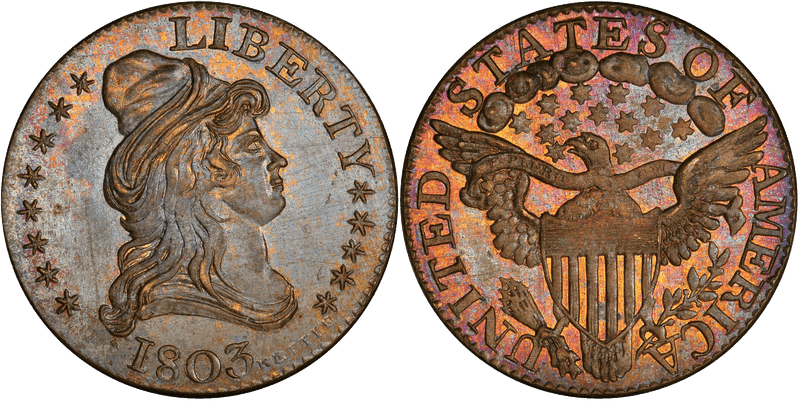
1803 Half Eagle Pattern - J-C1803-3, Kettle & Sons
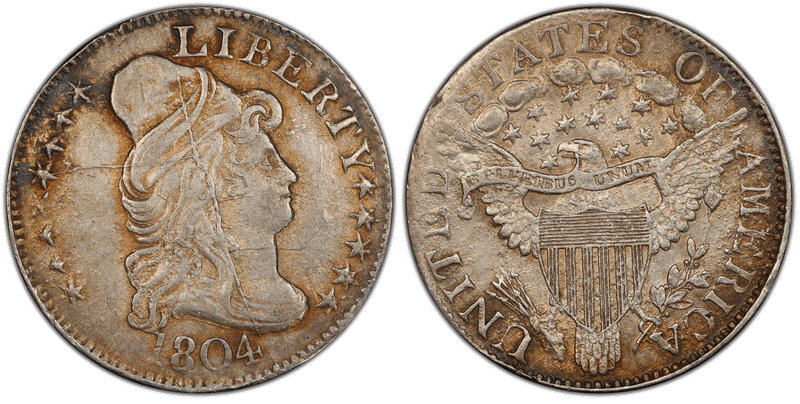
1804 Half Eagle Pattern - J-30, Private Restrike

1984 Washington Quarter - X-301, Squared Quarter
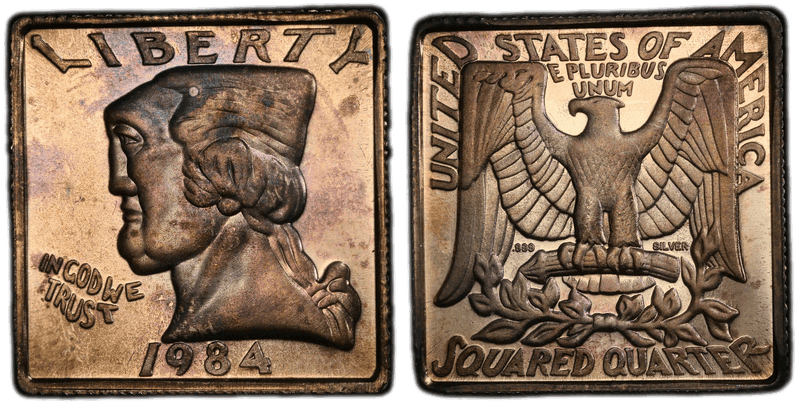
1984 Proof Washington Quarter - X-301a, Squared Quarter

1984 Proof Washington Quarter - X-301b, Squared Quarter

1984 Proof Washington Quarter - X-301e, Squared Quarter
Collector Essentials
Tools and references for building and protecting your coin collection.
10x-20x Jeweler's Loupe
A must-have for examining coin details, mint marks, and surface quality
Red Book — Guide to U.S. Coins
The essential annual reference for U.S. coin values, history, and mintages
Coin Albums & Storage
Archival-quality albums and holders to protect and display your collection
USB Digital Microscope
Capture detailed images for documentation and community submissions
As an Amazon Associate, NumisDex earns from qualifying purchases.