
1803 Die Trial - J-C1803-2, Kettle & Sons
Strike Type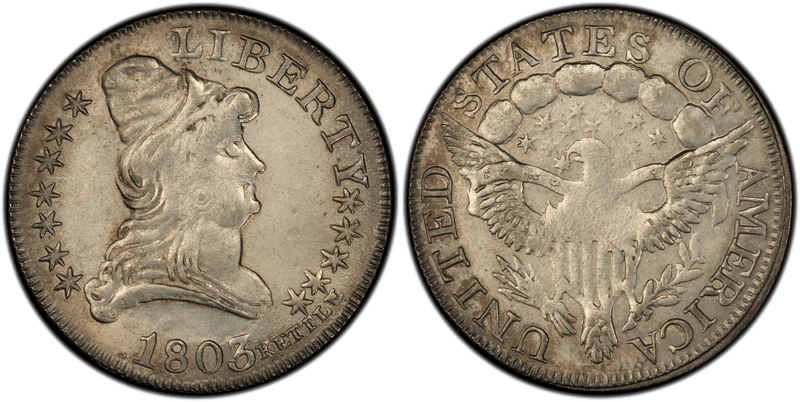
Coin Details
Auction Record
$517 • MS63 • 03-29-2017 • Stack's Bowers
Description
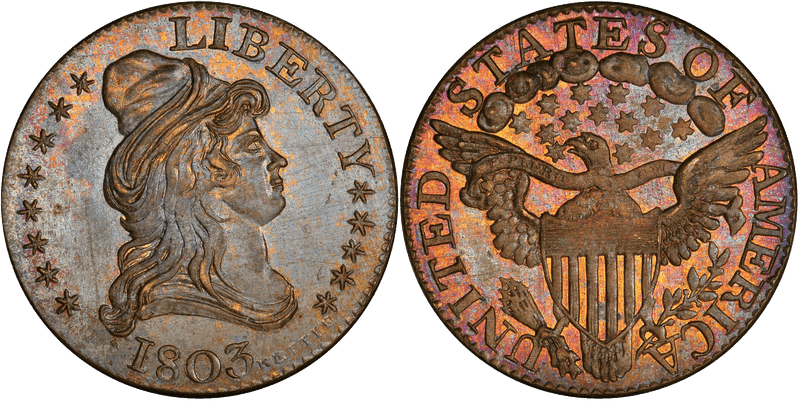
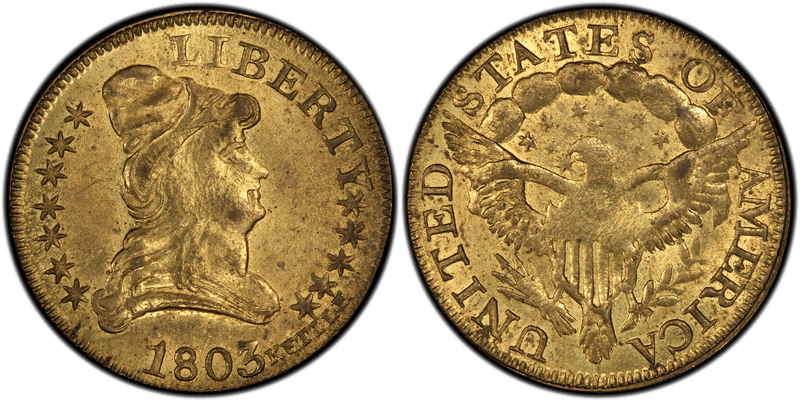
This brass die trial is one of a series of pieces produced by Kettle & Sons, a die-sinking and token-manufacturing firm based on Suffolk Street in Birmingham, England. The Kettle business was founded during the 1780s by Henry Kettle, with his sons Thomas and William joining the operation around 1800. The firm specialized in producing gaming tokens — brass imitations of gold coins intended for use as gambling chips in English gaming houses. This particular piece is cataloged as a die trial rather than a finished token, meaning it represents a test impression from the dies before full production. The design closely imitates the contemporary American Capped Bust Right style used on early US gold coinage, featuring a Liberty portrait on the obverse that mirrors the work of Robert Scot at the Philadelphia Mint. Kettle tokens are historically significant as the earliest known imitations of American gold coin designs produced abroad. Because of their close resemblance to genuine US gold coins, unscrupulous individuals both in the 19th century and today have occasionally removed the KETTLE signature (found to the right of the date) and offered these pieces as authentic American gold coinage. Die trials are rarer than the finished gaming tokens, as they were working proofs retained by the manufacturer.
Rarity Notes
Very rare. Die trials from the Kettle firm survive in much smaller numbers than the gaming tokens themselves, which are already scarce.
Cross References
Judd-C1803-2 (formerly listed in Judd appendix; removed from 10th edition)
External References
Error Varieties
No listings found
This category doesn't have any child listings yet.
Other Strike Types in This Series
Collector Essentials
Tools and references for building and protecting your coin collection.
10x-20x Jeweler's Loupe
A must-have for examining coin details, mint marks, and surface quality
Red Book — Guide to U.S. Coins
The essential annual reference for U.S. coin values, history, and mintages
Coin Albums & Storage
Archival-quality albums and holders to protect and display your collection
USB Digital Microscope
Capture detailed images for documentation and community submissions
As an Amazon Associate, NumisDex earns from qualifying purchases.