
1792 Cent Pattern - J-4, Birch Cent, Lettered Edge
Strike Type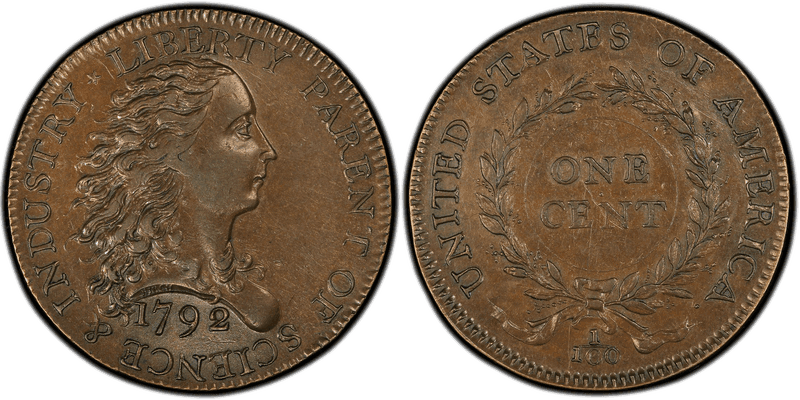
Coin Details
Auction Record
$1,175,000 AU58 03-26-2015 Stack's Bowers
Description
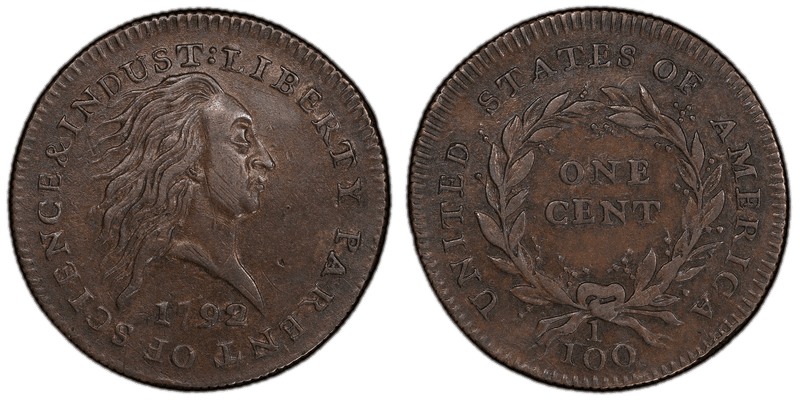
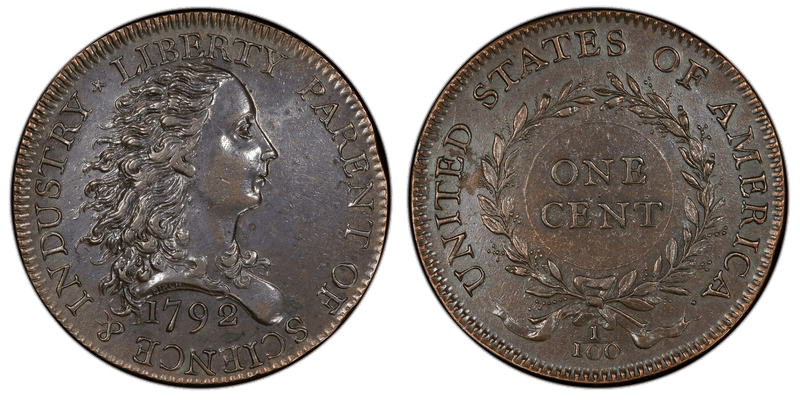
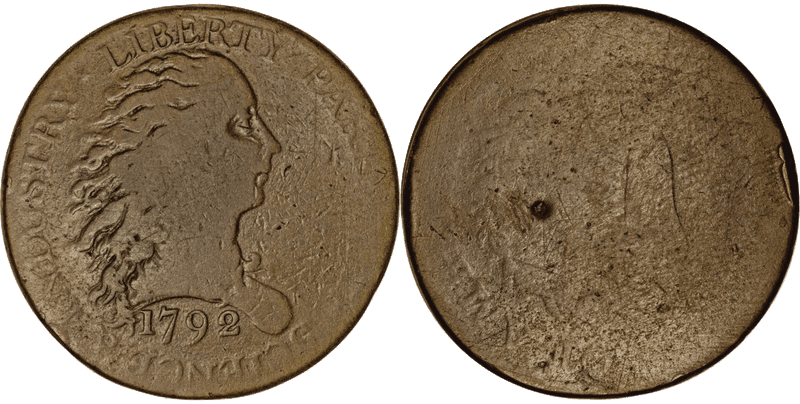
The 1792 Birch Cent with lettered edge, cataloged as Judd-4, is one of the most storied and debated pattern coins from the founding era of American coinage. The obverse features a right-facing Liberty bust with the date 1792 and the legend LIBERTY PARENT OF SCIENCE & INDUSTRY. The reverse displays a wreath enclosing ONE CENT and the fraction 1/100, with UNITED STATES OF AMERICA around the border. The edge bears the lettered inscription TO BE ESTEEMED * BE USEFUL * with two five-pointed stars separating the phrases. The identity of the engraver — Robert Birch, after whom the series takes its name — remains a subject of ongoing scholarly debate. The Birch cents are closely linked to the broader congressional dispute over whether to place George Washington's portrait on the nation's coinage. The unique Judd-6 variety, which bears the reverse inscription "G.W.PT." (an abbreviation of "George Washington President"), demonstrates that at least one version was produced with a presidential reference before Congress resolved to use an allegorical Liberty figure instead. The House debated the issue heatedly in March 1792, with some members arguing that depicting a living president smacked of monarchy. Weighing approximately 220 grains on average, the lettered-edge Birch cents (Judd-4) appear to conform to the 208-grain standard established by the Act of January 14, 1793 — indicating they was struck in late December 1792 or early January 1793 as Congress was finalizing the reduced weight. This contrasts with the heavier plain-edge Birch cents (Judd-5), which approach the original 264-grain standard of the April 1792 Mint Act. Approximately seven examples of the lettered-edge variety are known, all in copper, making this one of the most coveted early American patterns.
External References
Error Varieties
No listings found
This category doesn't have any child listings yet.
Other Strike Types in This Series
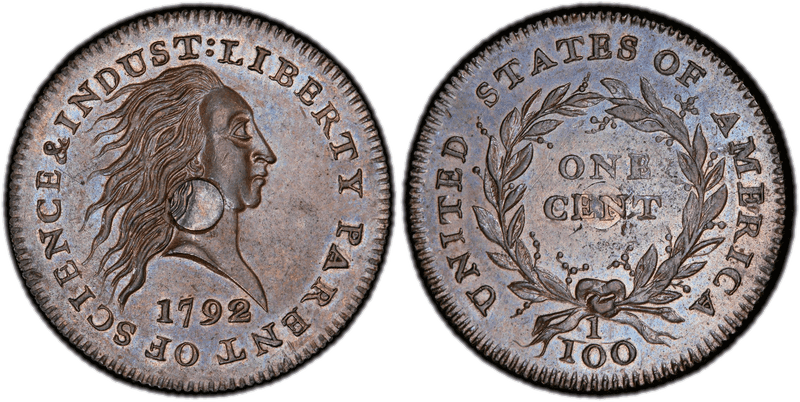
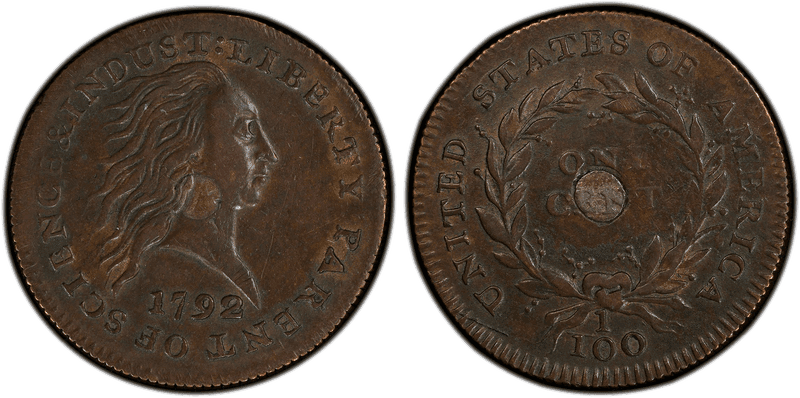
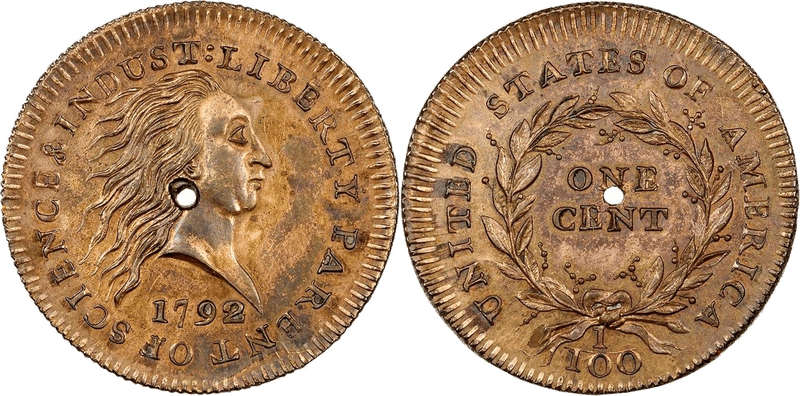
Collector Essentials
Tools and references for building and protecting your coin collection.
10x-20x Jeweler's Loupe
A must-have for examining coin details, mint marks, and surface quality
Red Book — Guide to U.S. Coins
The essential annual reference for U.S. coin values, history, and mintages
Coin Albums & Storage
Archival-quality albums and holders to protect and display your collection
USB Digital Microscope
Capture detailed images for documentation and community submissions
As an Amazon Associate, NumisDex earns from qualifying purchases.