
1792 Cent Pattern - J-1, Silver Center Cent
Strike Type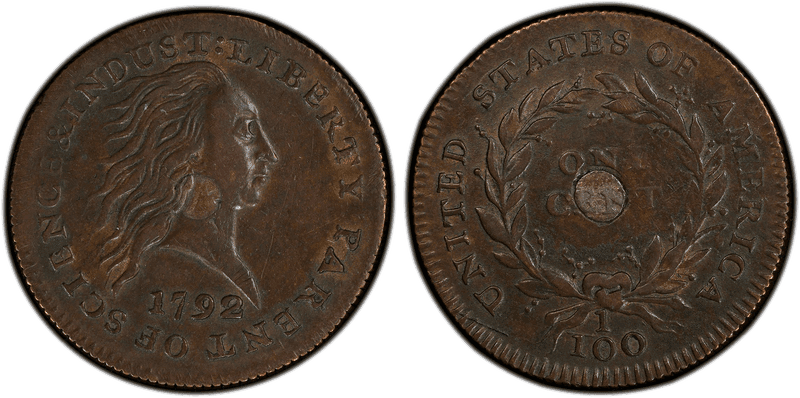
Coin Details
Auction Record
$143,000 MS60 11-01-1988 Bowers & Merena
Description
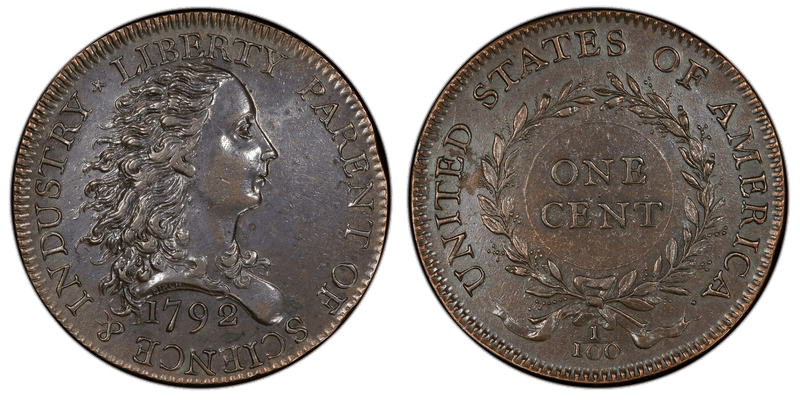
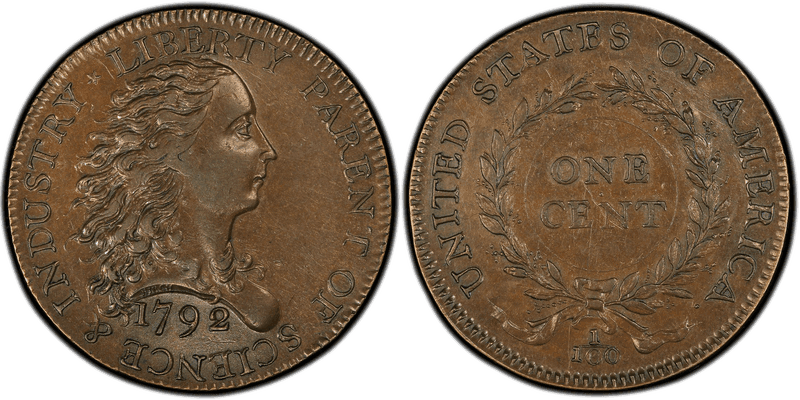
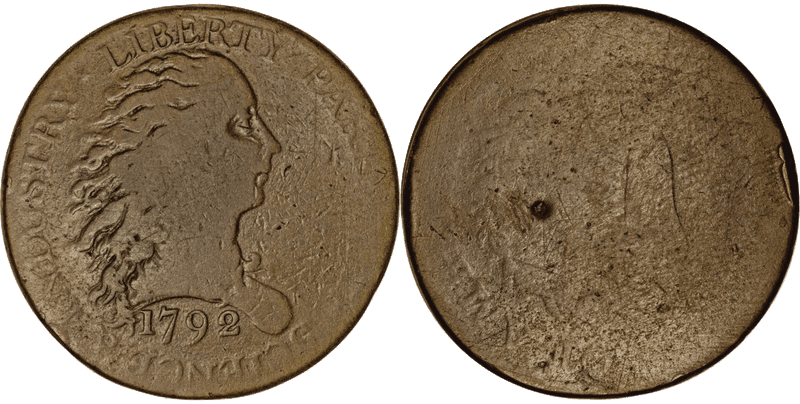
The 1792 Silver Center Cent, designated Judd-1 (Pollock-1) with a rarity of High R.6, represents one of the first experimental coins produced at the nascent United States Mint. Attributed to Henry Voight, the obverse features Liberty facing right with flowing hair, encircled by LIBERTY PARENT OF SCIENCE & INDUSTRY and the date 1792 below the bust. The reverse shows a ribbon-tied wreath containing ONE CENT, with UNITED STATES OF AMERICA along the rim and 1/100 at the bottom. Struck in copper with a silver center plug, the coin uses medallic die alignment. The silver center concept was an early attempt to solve a practical dilemma: the 1792 Mint Act required cents to contain 264 grains of copper, making them uncomfortably large for daily transactions. By embedding a silver plug worth three-quarters of a cent into a copper host worth one-quarter cent, the required intrinsic value could be achieved in a smaller, more convenient format. Thomas Jefferson documented the experiment in a December 18, 1792 letter to George Washington, noting that Mint Director David Rittenhouse planned to also test a fusible alloy version (Judd-2) and a plain copper version of the same size. The approach was ultimately abandoned as impractical for volume coinage. Two unfinished planchets — copper discs with empty center holes — were discovered during excavation of the first Mint building in 1907, providing physical evidence that production took place inside the facility. The Silver Center Cent ranks among the most desirable of all American pattern coins, with only a handful of examples known to survive.
External References
Error Varieties
No listings found
This category doesn't have any child listings yet.
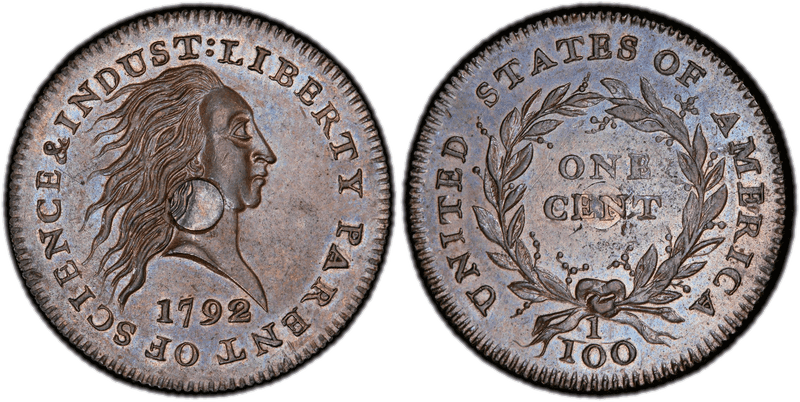
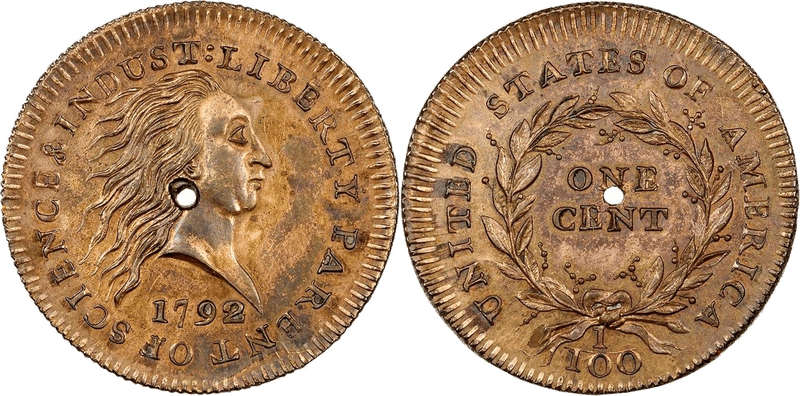
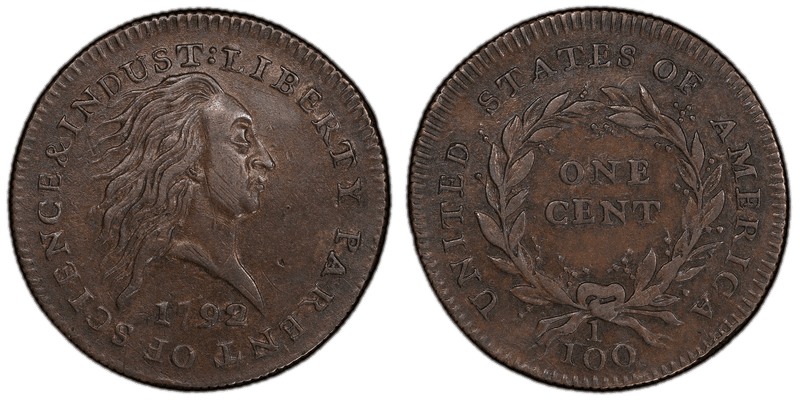
Other Strike Types in This Series
Collector Essentials
Tools and references for building and protecting your coin collection.
10x-20x Jeweler's Loupe
A must-have for examining coin details, mint marks, and surface quality
Red Book — Guide to U.S. Coins
The essential annual reference for U.S. coin values, history, and mintages
Coin Albums & Storage
Archival-quality albums and holders to protect and display your collection
USB Digital Microscope
Capture detailed images for documentation and community submissions
As an Amazon Associate, NumisDex earns from qualifying purchases.