
1792 Cent Pattern - J-1, Silver Center
Strike Type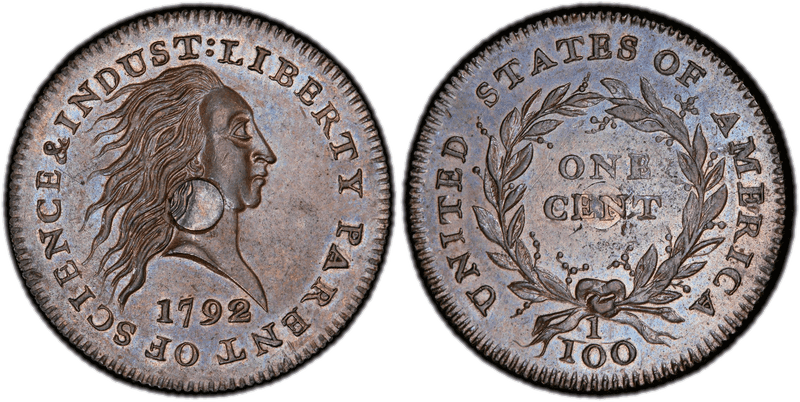
Coin Details
Auction Record
$2,520,000 SP67BN 01-24-2021 Heritage Auctions
Description
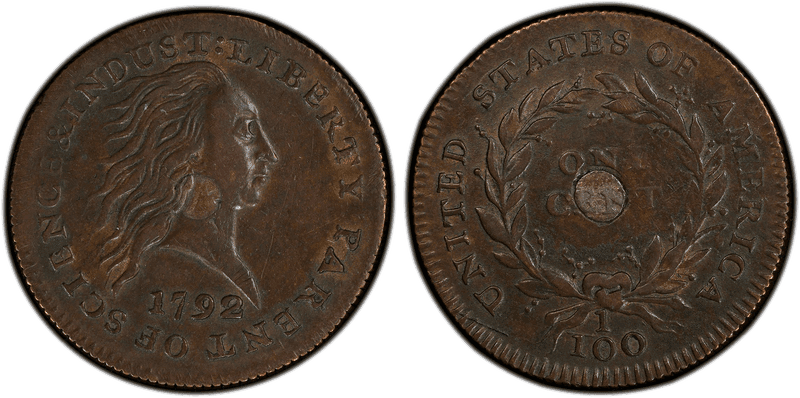
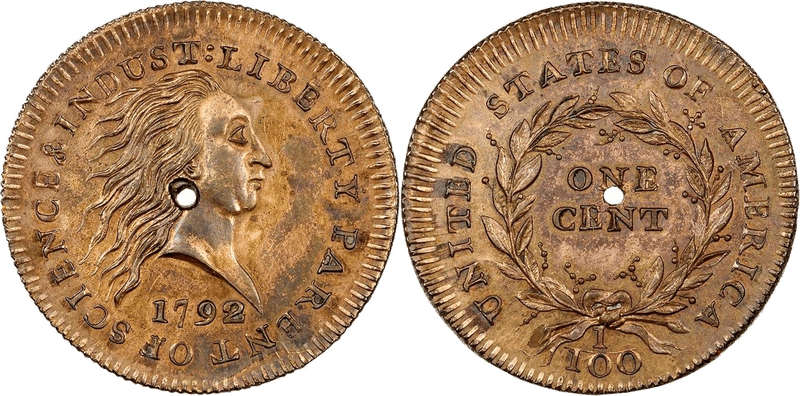
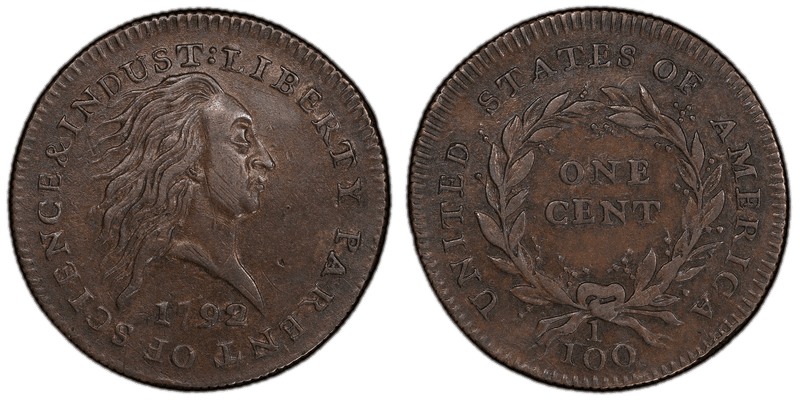
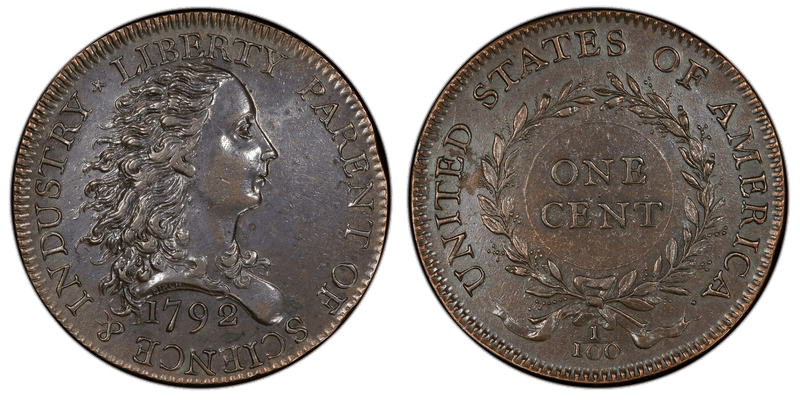
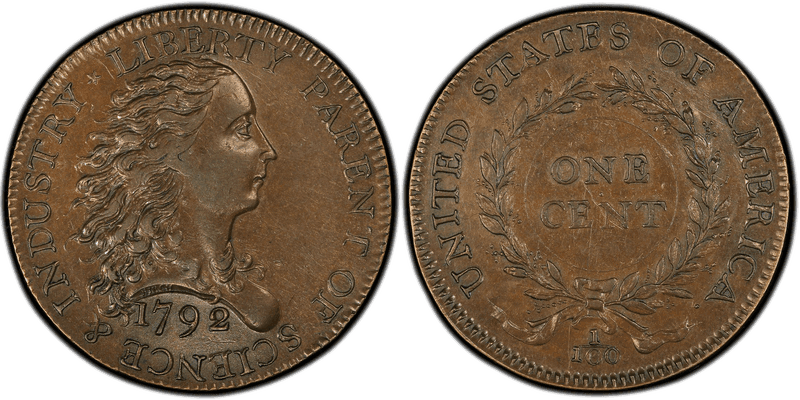
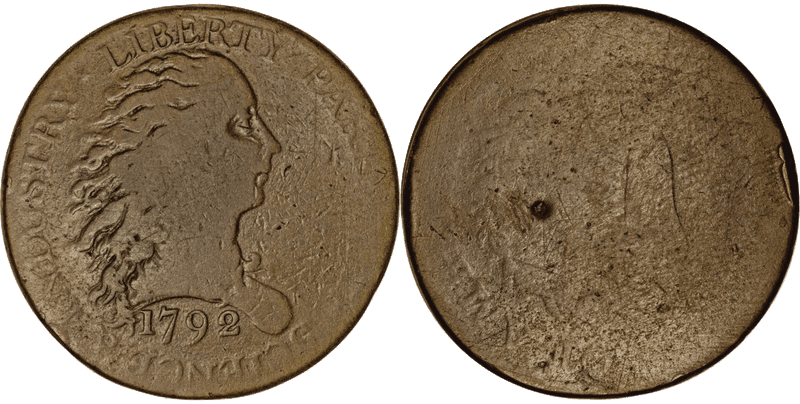
The 1792 Silver Center Cent, cataloged as Judd-1 (Pollock-1) and rated High R.6, stands as one of the most celebrated experimental coins in American numismatic history. Engraved by Henry Voight, the obverse depicts a right-facing Liberty bust with flowing hair, surrounded by the motto LIBERTY PARENT OF SCIENCE & INDUSTRY and the date 1792. The reverse displays a wreath tied with a ribbon enclosing the denomination ONE CENT, with UNITED STATES OF AMERICA around the border and the fraction 1/100 below. The piece was struck in copper with a small silver plug inserted at the center, using medallic die alignment. This pattern emerged from the earliest days of the United States Mint, when officials wrestled with how to produce a one-cent coin that contained a full cent's worth of metal without being impractically large. The Mint Act of April 2, 1792, mandated cents weighing 264 grains of pure copper — an unwieldy size for everyday commerce. Voight's ingenious solution placed a silver plug worth three-quarters of a cent into a smaller copper disc worth one-quarter of a cent, achieving the correct intrinsic value in a more manageable package. Secretary of State Thomas Jefferson sent two specimens to President George Washington in December 1792 for review, describing them as made "on Voigt's plan." The concept ultimately proved too labor-intensive for mass production, and Congress settled on large copper cents beginning in 1793. It was not until the 1850s that small-format cents were reconsidered. In 1907, excavations at the original Philadelphia Mint site uncovered two prepared planchets — copper blanks with center holes awaiting silver plugs — confirming that these experimental cents were indeed produced within the Mint walls. Fewer than a dozen examples survive, each commanding extraordinary prices at auction.
External References
Error Varieties
No listings found
This category doesn't have any child listings yet.
Other Strike Types in This Series
Collector Essentials
Tools and references for building and protecting your coin collection.
10x-20x Jeweler's Loupe
A must-have for examining coin details, mint marks, and surface quality
Red Book — Guide to U.S. Coins
The essential annual reference for U.S. coin values, history, and mintages
Coin Albums & Storage
Archival-quality albums and holders to protect and display your collection
USB Digital Microscope
Capture detailed images for documentation and community submissions
As an Amazon Associate, NumisDex earns from qualifying purchases.