
1662 Twopence Oak Tree
Strike Type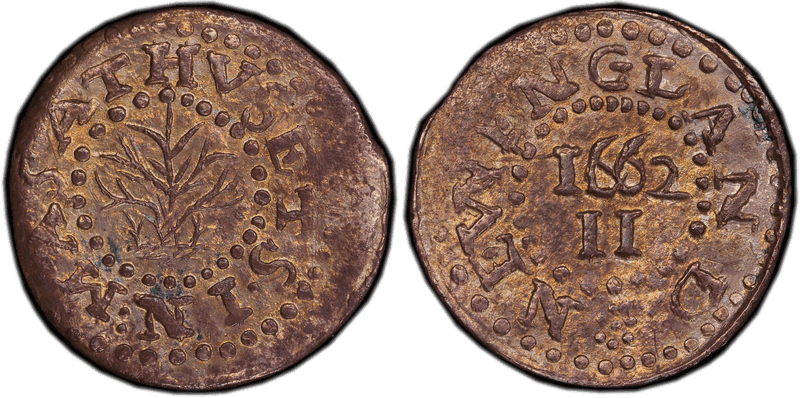
Coin Details
Description
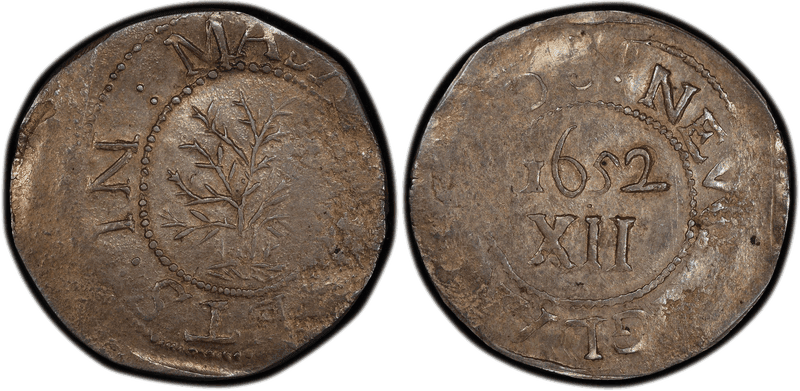
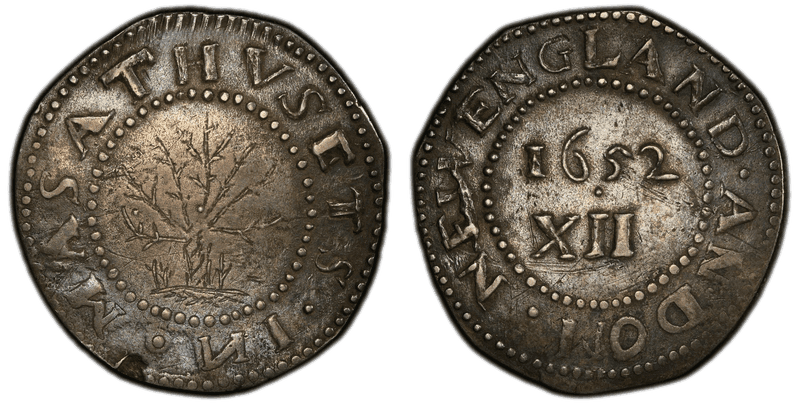
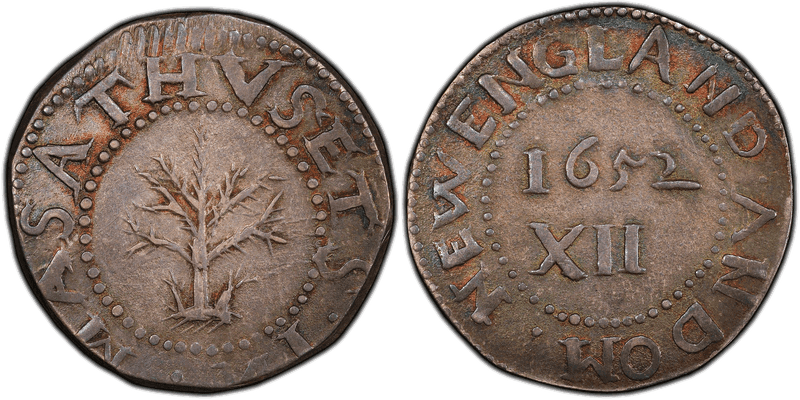
The Oak Tree twopence is unique among Massachusetts Bay Colony silver coins in bearing the date 1662 rather than the ubiquitous 1652 found on all other denominations. This ten-year discrepancy reflects the fact that the twopence denomination was authorized by a separate act of the General Court in 1662, a decade after the original coinage legislation. The twopence is the only Massachusetts colonial silver denomination to acknowledge its actual year of authorization. The obverse features a small oak tree encircled by MASATHVSETS IN, while the reverse displays the Roman numeral II (two pence) within a beaded circle and the legend NEW ENGLAND AN DOM 1662. The twopence is the smallest denomination struck in the series, with planchets measuring approximately 15 millimeters and a target weight of roughly 14.3 grains (0.93 grams) of sterling silver. The introduction of a twopence denomination in 1662 addressed the persistent colonial need for very small change. Even the threepence was too large for many routine transactions in an economy where a day's wage for unskilled labor might be only a shilling. The twopence brought Massachusetts coinage closer to the level of everyday commerce, though its tiny size made it prone to loss and difficult to handle. Several die varieties are cataloged, including notable subtypes distinguished by the size of the numeral 2 on the reverse. The Oak Tree twopence is among the more available Massachusetts colonial types, as a relatively large number of specimens have survived compared to the Willow Tree denominations, though it remains genuinely rare by the standards of later American coinage.
Rarity Notes
Rare, but the most available Oak Tree denomination after the shilling. Several hundred examples may survive across all varieties.
Cross References
Noe 1-3; Salmon; Whitman 290-310; Crosby
External References
Error Varieties
No listings found
This category doesn't have any child listings yet.
Other Strike Types in This Series
Collector Essentials
Tools and references for building and protecting your coin collection.
10x-20x Jeweler's Loupe
A must-have for examining coin details, mint marks, and surface quality
Red Book — Guide to U.S. Coins
The essential annual reference for U.S. coin values, history, and mintages
Coin Albums & Storage
Archival-quality albums and holders to protect and display your collection
USB Digital Microscope
Capture detailed images for documentation and community submissions
As an Amazon Associate, NumisDex earns from qualifying purchases.