
VAM Collecting: The Morgan Dollar Deep Dive
VAM VarietyThousands of Die Varieties, One System to Catalog Them All
Most error collecting asks one question: is this coin interesting? VAM collecting asks a harder one — which specific die pair struck this coin?
VAM stands for Van Allen-Mallis, after Leroy C. Van Allen and A. George Mallis, who built the definitive die-variety cataloguing system for Morgan dollars (1878-1921) and Peace dollars (1921-1935). Each VAM number identifies one unique pairing of an obverse die with a reverse die, fingerprinted by its diagnostics: doubled dies, repunched dates, repunched mint marks, die cracks, clash marks, and polishing patterns.
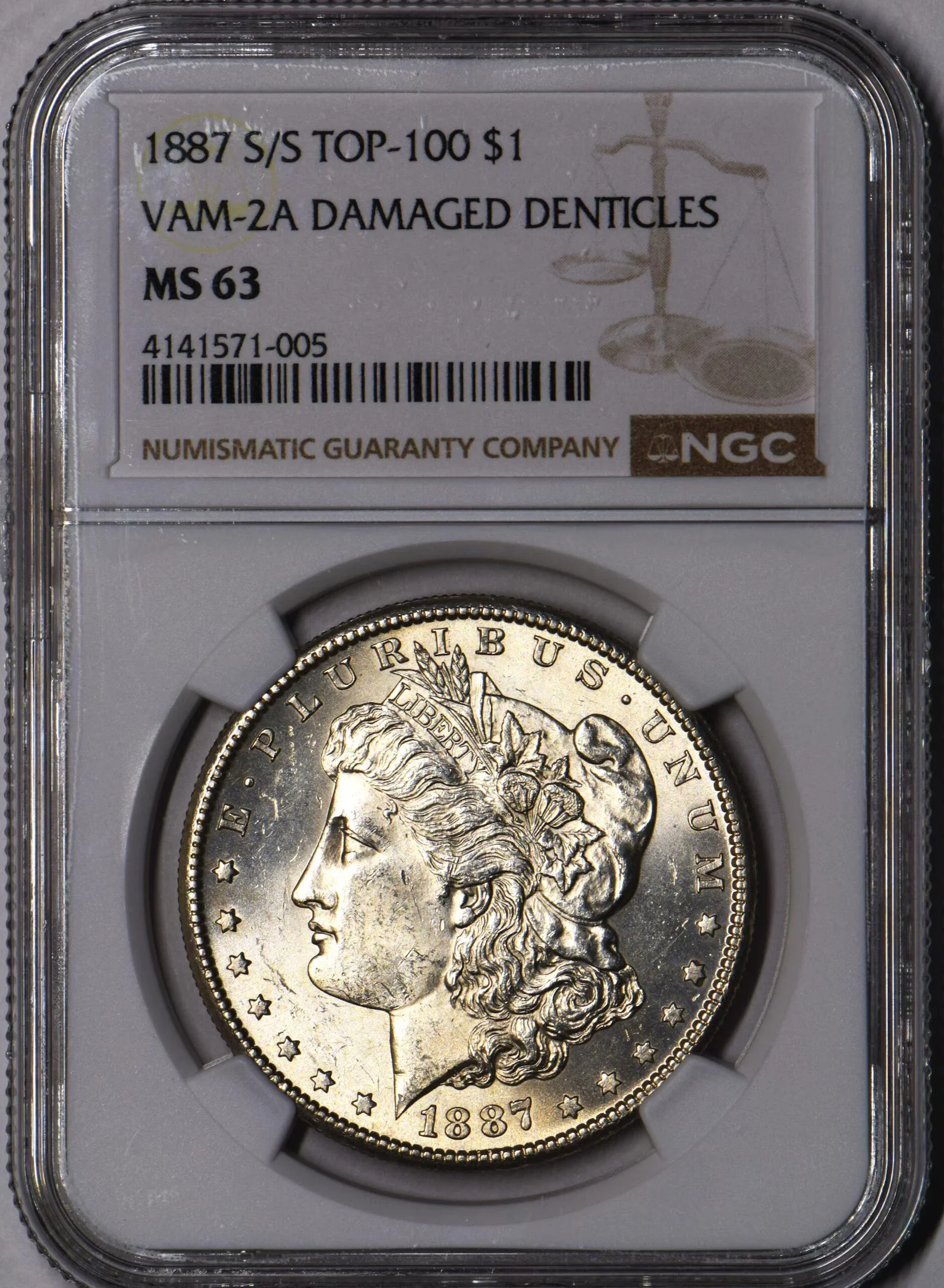
A graded 1887-S Morgan Dollar VAM-2A — die diagnostics like this are catalogued and can be found in the NumisDex catalog with detailed die marker descriptions
The mental shift is that you stop treating a coin as a date and a mint mark, and start treating it as the output of a particular tool, on a particular day, in a particular state of wear. The system now documents thousands of distinct die pairs, making VAM collecting one of the most active specialties in American numismatics.
Why Morgan and Peace Dollars Got Their Own Catalogue
No other United States series has anything like this. Three conditions had to line up, and they only lined up here.
Enormous production across five mints. Morgans were struck at Philadelphia, New Orleans, San Francisco, Carson City and later Denver — hundreds of millions of coins, which meant hundreds of dies, each with its own history.
Dies were finished by hand and run hard. Mint marks were punched individually into working dies until 1990. Dates were repunched. Dies were polished, clashed, cracked, and kept in service well past the point of good sense. Every one of those interventions left a signature.
And then the coins were stored, not spent. Millions of silver dollars sat in Treasury vaults in mint-sealed bags for decades. When the bags were released, collectors received high-grade coins in quantity — enough surviving material, in good enough condition, for die-level differences to be visible and studiable at scale. Most nineteenth-century series simply wore out in circulation. The silver dollars did not.
Five Varieties Worth Knowing
1888-O VAM-4 — "Hot Lips"
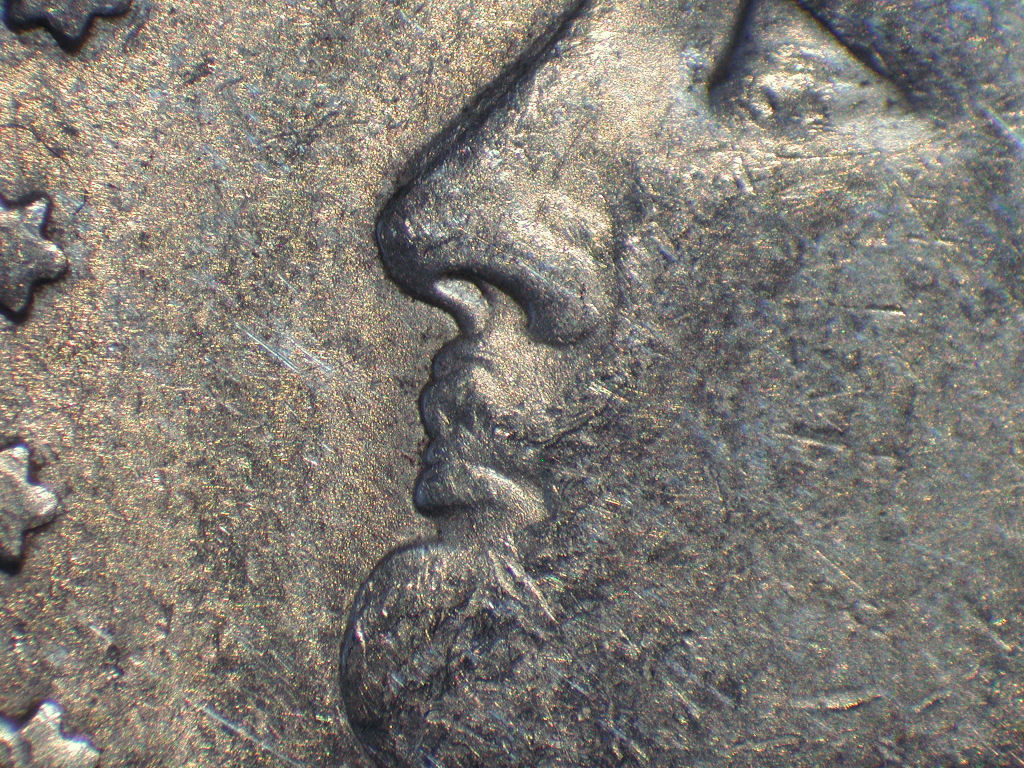
A doubled head so pronounced that Liberty appears to have two profiles — the nose, lips and chin all show a clear second impression. This is the rare VAM that needs no magnification at all. Discovered by Francis Klaes in June 1963. Both a Top 100 and a "WOW!" Morgan VAM. See the listing.
1900-O VAM-8A — O over O over CC
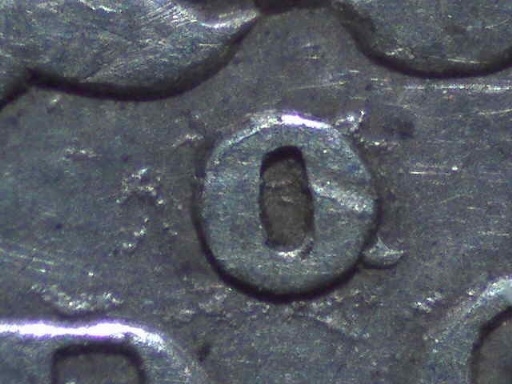
Look underneath and to the right of the O. Those curved arcs are the remains of a CC.
The Carson City Mint closed in 1893. Its unused dies did not go to waste — they were shipped to New Orleans, had the O punched over the existing CC, and went back into production. This coin is physical evidence of that transfer, struck seven years after Carson City stopped making coins.
The attribution history is worth noting too: discovered by Leroy Van Allen in December 1965, then separately identified as VAM-8A by Denny Thostenon in February 1978 — the catalogue refining its own work thirteen years later. Top 100. See the listing.
The 1900-O is the richest O/CC date in the series; our catalog holds twelve distinct O/CC varieties for it. For the wider story see The 1900-O/CC Morgan Dollar — The Last Carson City Silver Dollar.
1878-P VAM-14.5 — "Spiked A"
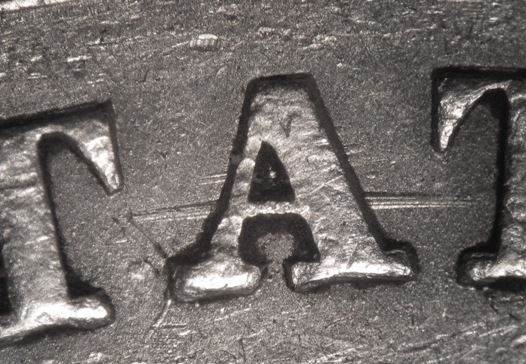
A raised spike protrudes from the base of the A in STATES — a die chip in exactly the wrong place, and once you know to look for it, unmistakable. Discovered by Steve Sabella in June 1979. A Hot 50 Morgan VAM. See the listing.
1880-O VAM-48 — "Hangnail Eagle"
Doubled UNITED and a doubled 8 in the date, plus the hangnail — a small raised spur on the eagle, near the arrow feathers on the reverse. Discovered by Jeff Oxman in April 1999; formerly catalogued as VAM-1A, which Lewis Wotring had found back in November 1971. Top 100. See the listing.
1922-D VAM-7B — the Peace dollar side
Tripled reverse, a gouge in the tiara band, a long spike off the eagle's shoulder, and a die break below the L. A Top 50 Peace VAM, and a reminder that Peace dollars have their own deep catalogue — 1,745 of our VAM listings are Peace dollars. See the listing.
A Culture of Named Discovery
Here is the thing about VAM collecting that no other error specialty quite matches.
Of the 7,744 VAM listings in the NumisDex catalog, 4,087 record who discovered the variety and when.
Francis Klaes, June 1963. Ron Downing, March 1966. Steve Sabella, June 1979. Jeff Oxman, April 1999. Jody Faust, April 2023 — a seventy-second distinct variety identified on the 1900-O more than 120 years after those coins were struck.
That is not a footnote. It is the character of the whole specialty. VAM collecting is an ongoing research effort with a public record of who contributed what, and new varieties are still being discovered and attributed today. Very few corners of numismatics let an ordinary collector with patience and a loupe put their name permanently on a discovery.
Leroy Van Allen and George Mallis are themselves among the most prolific contributors in our data — Van Allen with over 300 attributed discoveries, Mallis with around 100. They did not just build the catalogue; they kept filling it.
The Curated Lists
The full catalogue is unmanageable as an entry point, so specialists organize it with curated lists. These designations appear throughout our listings:
- Top 100 Morgan VAMs — 243 listings in our catalog
- Hot 50 — 144
- Hit List 40 — 109
- "WOW!" VAMs — 90
- Top 50 Peace VAMs — 80
If you are starting out, those lists are the map. They select for varieties that are visually dramatic, historically interesting, or both — the ones worth learning to recognize first.
How to Get Started
- Pick one date and mint. The catalogue is enormous. Learn every VAM for a single issue and the diagnostics start to generalize.
- Get the reference. The Van Allen-Mallis book, plus VAMWorld.com for photographs.
- Work a curated list. Top 100, Hot 50, or Hit List 40 — high visual impact, well documented, and a defined finish line.
- Cherry-pick raw coins. Unattributed VAMs turn up in dealer bins constantly. Finding one yourself is the best part of the specialty.
VAM vs. Machine Doubling
Worth saying plainly, because it comes up constantly: a great many "doubled" Morgan dollars are not VAMs at all. Machine doubling is a flat, shelf-like doubling caused by die bounce during striking. It affects the whole coin, it is a striking artifact rather than a die variety, and it carries no premium. A true doubled-die VAM shows rounded, separated design elements with their own contours. See Machine Doubling vs. True Doubled Die for the diagnostic.
Browse all 7,744 VAM listings in the NumisDex catalog — 5,999 Morgan and 1,745 Peace.
Discussion
- Do you collect VAMs? What date/mint is your specialty?
- What's the best cherry-pick you've ever made — an unattributed VAM found in a dealer's junk bin?
- Top 100 or Hit List — which list guides your collecting?
- Early die state or late die state — which do you prefer, and why?
- Does anyone here have a discovery credit of their own?
Related Reading
- The 1900-O/CC Morgan Dollar — The Last Carson City Silver Dollar — the full story behind the O/CC overpunch
- Repunched Mint Marks (RPM) — the hand-punching process that produces a large share of VAM diagnostics
- Morgan Dollars: Why America's Most Collected Coin Still Captivates — the series overview
- 1893-S Morgan Dollar: How to Spot the Common Counterfeits — worth reading before buying any key date raw