
Transitional Errors: When Old Meets New at the Mint
Coins From the Design Changeover Window
A transitional error occurs when the Mint pairs a die from one design type or year with a die from another. These happen during the narrow window when an outgoing design is being retired and a new one is being introduced — both sets of dies coexist in the facility, and occasionally the wrong combination reaches the press.
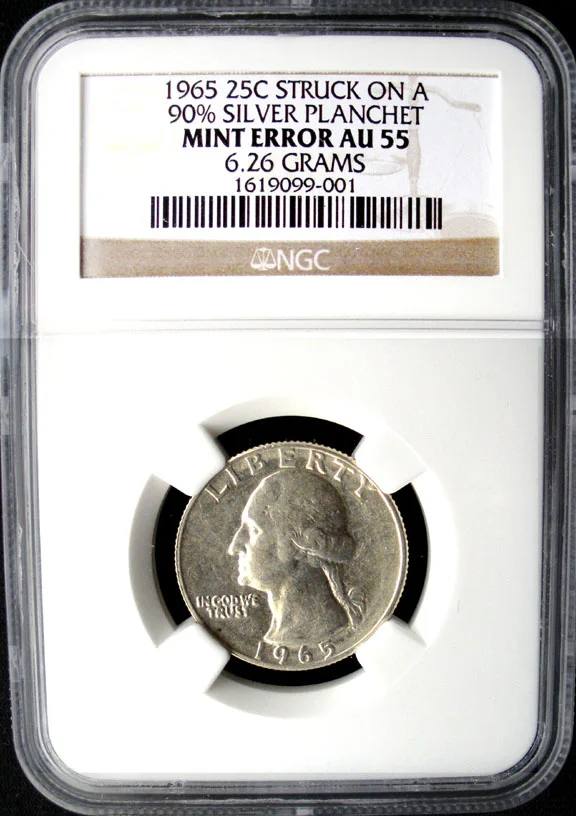
A transitional error — struck when old meets new at the Mint, producing a coin that shouldn't exist with that particular combination of dies, planchet, or composition
Transitional errors rank among the rarest and most valuable categories of U.S. Mint errors.
Notable Transitionals
- 1965 Silver Roosevelt Dime — When the Mint transitioned from 90% silver to clad in 1965, a few dimes were struck on silver planchets. Fewer than a dozen are confirmed. A gem example sold for over $9,000.
- 2000-P Sacagawea/Quarter Mule — A Sacagawea obverse paired with a Washington quarter reverse. Approximately 19 known, with six-figure prices.
- 1964-D Peace Dollar — The greatest "what if" in numismatics. 316,076 were struck before the order was rescinded, and the Mint claims all were melted. No example has ever been authenticated.
The Counterfeiting Problem
Because transitional errors command enormous premiums, they're among the most commonly counterfeited error types. Authentication by PCGS or NGC is absolutely non-negotiable. Weight testing with a precision scale is the first screening tool — a 1965 dime weighing 2.50g instead of 2.27g warrants immediate professional examination.
Transition Dates to Watch
1857 (Flying Eagle introduction), 1909 (Lincoln cent), 1938 (Jefferson nickel), 1946 (Roosevelt dime), 1964-65 (silver to clad), 1979 (Susan B. Anthony), 2000 (Sacagawea), 2007 (Presidential dollar)
Discussion
- Do you believe any 1964-D Peace dollars survived the melt?
- What design transition period do you find most interesting for errors?
- Have you ever found a coin that made you think "is this a transitional?" What happened?
- Which transitional error is on your all-time collecting wish list?