
1930 Mercury Dime
Base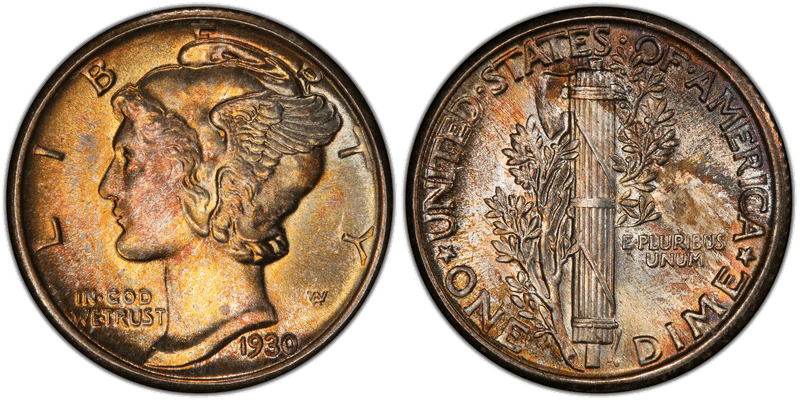
About This Coin
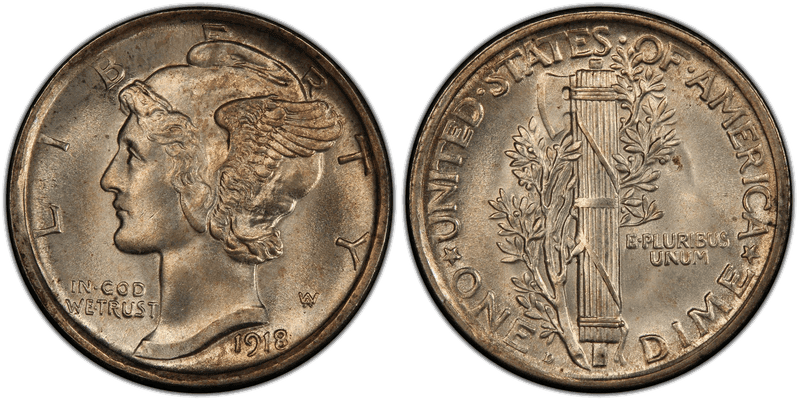
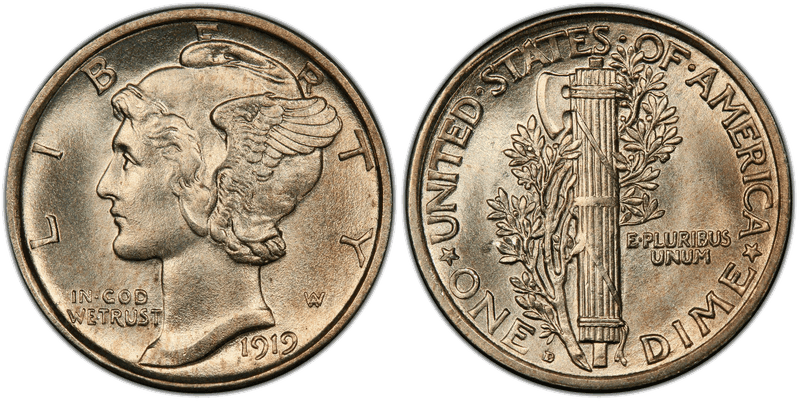
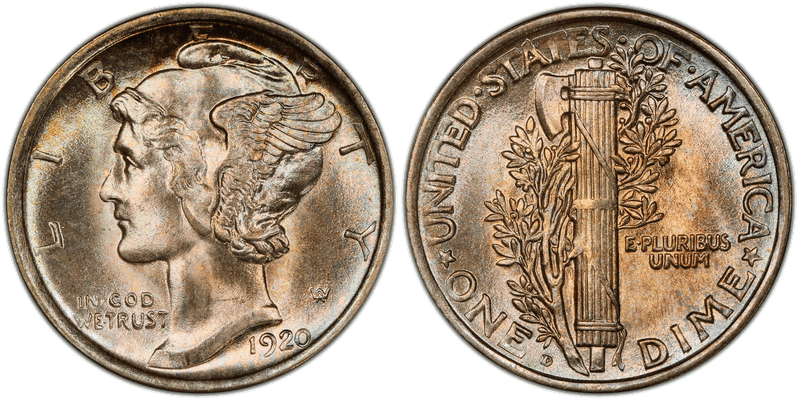
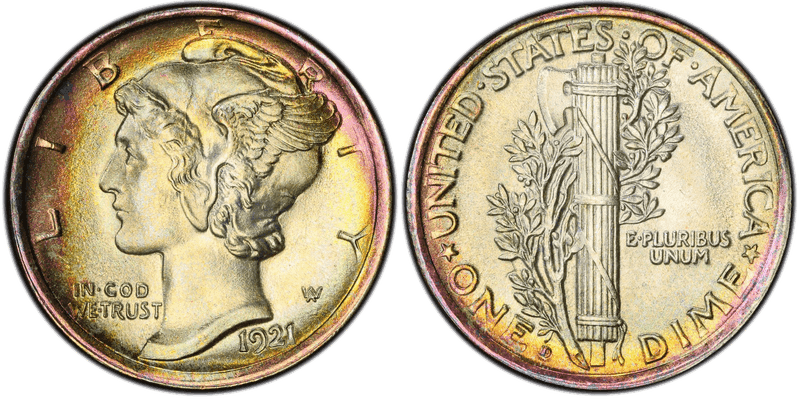
The 1930 Mercury Dime is a United States dime from the Mercury Dimes 1916-1945 series — 14th of 27 years in the series. In 1930, coins were struck at the Philadelphia and San Francisco Mints with a combined mintage of 8.6 million. This ranks 3rd of 27 years by total mintage, below the series median of 56.6 million. The obverse features young Liberty wearing a winged Phrygian cap, symbolizing freedom of thought — often called the "Mercury" dime despite not depicting the Roman god and the reverse displays a Roman fasces — a bundle of rods with an axe — entwined with an olive branch, symbolizing strength through unity tempered by peace. Struck during the Great Depression, when mintages dropped sharply and the United States abandoned the gold standard in 1933. Struck in 90% silver, 10% copper, weighing 2.5 grams, 17.9 mm in diameter, with a reeded edge. Collectors have identified one known die variety for this date (repunched mint mark). Produced 9 years after the celebrated 1921 key date. Across its variants, estimated values range from $8 to $262 depending on mint mark, grade, and strike type. A notable auction result reached $2.1K in MS66 grade at Superior Galleries. Designed by Adolph Alexander Weinman.
Value Estimates
Values as of May 2026 — range across all strike types, reflecting typical grades (G-4 through MS-63). Coins in lower or exceptional grades may fall outside this range.
Specifications
Strike Types & Varieties(2)
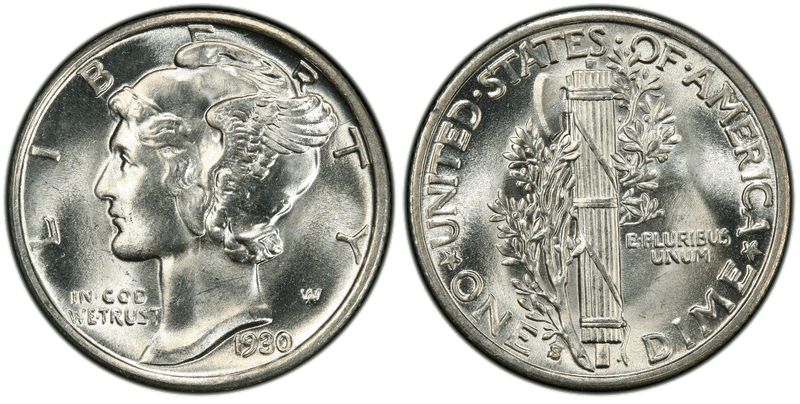
1930 (S) Mercury Dime
1930 Mercury Dime
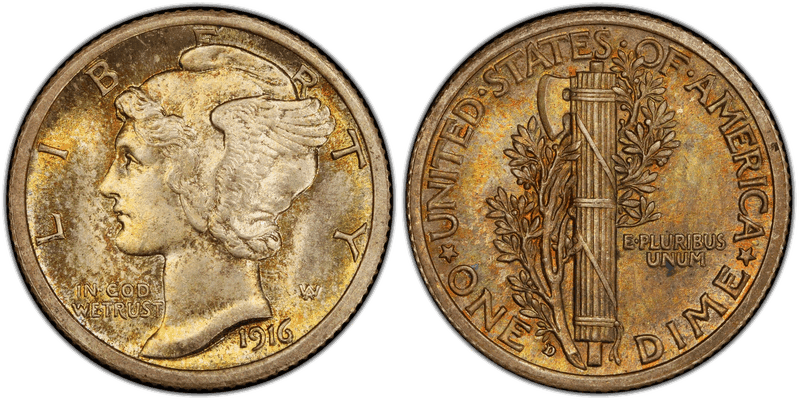
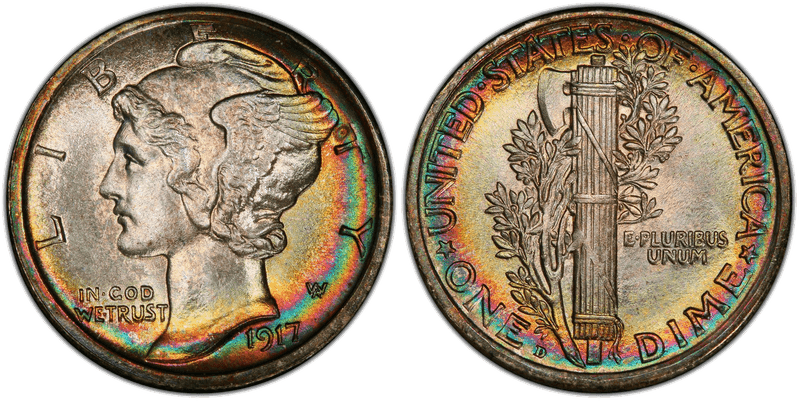
Other Base Coins in This Series
Collector Essentials
Tools and references for building and protecting your coin collection.
10x-20x Jeweler's Loupe
A must-have for examining coin details, mint marks, and surface quality
Red Book — Guide to U.S. Coins
The essential annual reference for U.S. coin values, history, and mintages
Coin Albums & Storage
Archival-quality albums and holders to protect and display your collection
USB Digital Microscope
Capture detailed images for documentation and community submissions
As an Amazon Associate, NumisDex earns from qualifying purchases.