
1901 Silver HK-796 Lesher Dollar Boyd Park-Imprint Type
Strike Type
Coin Details
Auction Record
$3,525 AU53 02-16-2017 Heritage Auctions
Description
Cataloged as HK-796, this Lesher Referendum Dollar represents one of the most remarkable private monetary experiments in American numismatic history — a Colorado mining man putting his free silver beliefs into tangible metallic form. With an estimated mintage of 150 pieces, this variety is scarce. The first type, struck from dies cut by Frank Hurd of Denver, consisted of 100 octagonal pieces weighing one troy ounce (480 grains) of .950 fine silver with a face value of $1.25. The scheme attracted support from A.B. Bumstead, a Victor grocer, for whom a second, more elaborate octagonal type was produced featuring a mining scene designed by Herman Otto, a Denver artist, with approximately 700 pieces manufactured. A brief round 'Bank Type' experiment (about 10 die trials) was quickly abandoned, and in 1901 Lesher produced a smaller (32mm), lighter (412.5 grains) octagonal imprint type at $1.00 face value with approximately 800 pieces across nine merchant varieties. Boyd Park, a Denver jeweler, received approximately 150 Lesher dollars bearing his counterstamp, making his variety one of the more commonly encountered merchant imprint types. Lesher's private coinage operated in a legal gray area regarding the federal government's monopoly on currency issuance. According to his 1914 interview with Farran Zerbe (1871-1949), the legendary ANA figure, government agents seized the dies used for the initial and Bumstead types. However, the American Numismatic Society collection, donated by Zerbe himself (including 2 obverse dies, 1 reverse die, 2 punches, and 3 bed plates), complicates the seizure narrative. Zerbe published his account in the American Journal of Numismatics in 1917, and Lesher estimated his total production at 3,000 to 3,500 pieces. So-called dollars acquired their name because they are not true dollar coins but rather privately issued medals that approximate the size and weight of U.S. silver dollars. The collecting specialty emerged in the early 20th century and was formalized by the Hibler-Kappen catalog, which organized hundreds of diverse pieces — from exposition medals to political tokens to private monetary experiments — into a coherent collecting framework.
Rarity Notes
Lesher Referendum Dollars are rare across all varieties, with total mintage estimated at only a few hundred pieces per type. The Boyd Park variety is among the more frequently encountered Lesher varieties, though still genuinely rare. These pieces are highly prized by collectors of both so-called dollars and Western Americana.
Cross References
HK-796; PCGS #643513
External References
Error Varieties
No listings found
This category doesn't have any child listings yet.
Other Strike Types in This Series
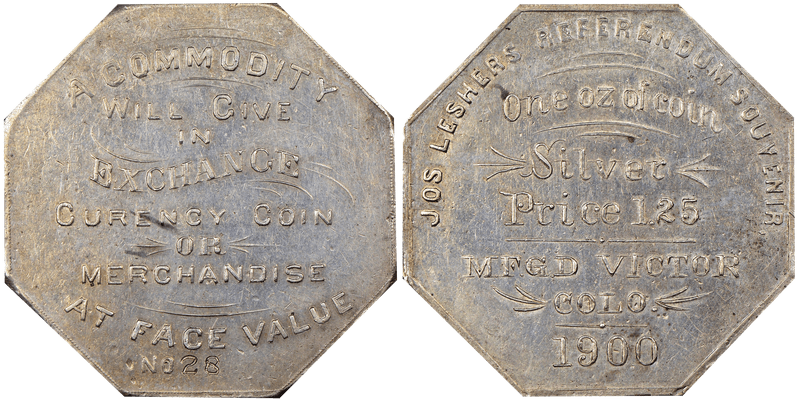
1900 Silver Lesher Dollar HK-787, A.B. Bumstead
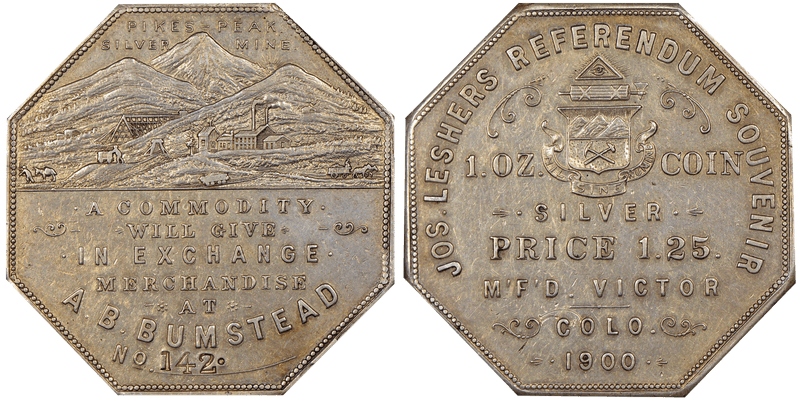
1900 Silver Lesher Dollar HK-788, A.B. Bumstead
1900 Silver Lesher Dollar HK-788a, A.B. Bumstead Variant
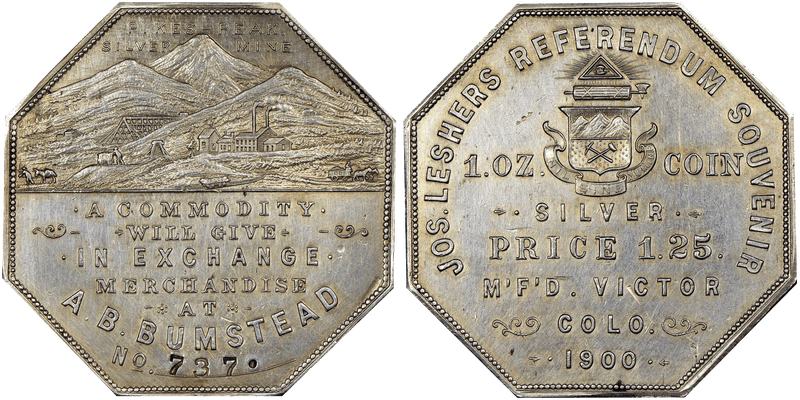
1900 Silver Lesher Dollar HK-789, C.D. Cowen
1900 Silver Lesher Dollar HK-789a, C.D. Cowen Variant
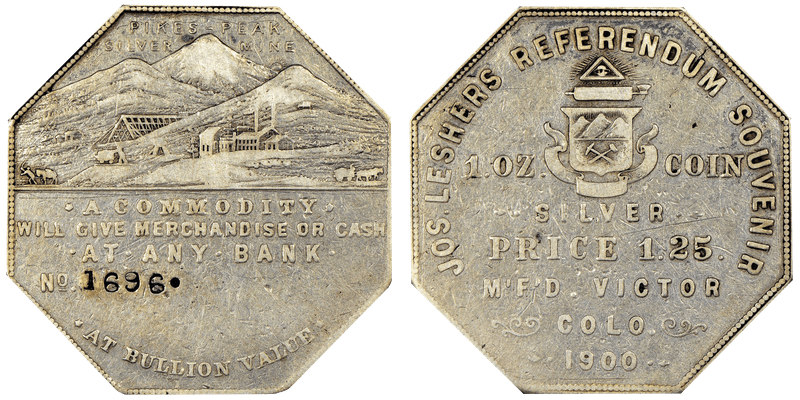
1900 Silver Lesher Dollar HK-790, C.A. Morris Druggist
Collector Essentials
Tools and references for building and protecting your coin collection.
10x-20x Jeweler's Loupe
A must-have for examining coin details, mint marks, and surface quality
Red Book — Guide to U.S. Coins
The essential annual reference for U.S. coin values, history, and mintages
Coin Albums & Storage
Archival-quality albums and holders to protect and display your collection
USB Digital Microscope
Capture detailed images for documentation and community submissions
As an Amazon Associate, NumisDex earns from qualifying purchases.