
1900 Silver Lesher Dollar HK-788a, A.B. Bumstead Variant
Strike TypeCoin Details
Description
This Lesher Referendum Dollar (HK-788a) documents Joseph Lesher's grassroots Free Silver experiment — he called them 'Referendum' dollars because no one was compelled to accept them; they were referred to the people for acceptance or rejection. This 1900 variety is from the first year of production. On November 13, 1900, in the small mining town of Victor, Colorado, Joseph Lesher (1838-1918) struck the first of his privately issued silver dollars. Born in Fremont, Ohio, on July 12, 1838, Lesher had settled in Victor in the heart of the Cripple Creek mining district, one of the richest gold-producing regions in Colorado. Frustrated by the federal government's refusal to coin silver freely after the Coinage Act of 1873, Lesher created his own silver currency, calling them 'Referendum' dollars because no one was compelled to accept them — they were referred to the people for acceptance or rejection. A.B. Bumstead, a Victor grocer, was the first merchant to support Lesher's referendum concept. The Bumstead-type pieces featured a more elaborate mining scene designed by Herman Otto, a Denver artist, with approximately 700 pieces manufactured across two sub-varieties. The merchants who accepted and counterstamped Lesher's dollars came from five Colorado towns plus one in Nebraska: J.M. Slusher, a Cripple Creek grocer (260 pieces); Sam Cohen, a Victor jeweler who later became a prominent New York attorney and authored 'Gold Rush De Luxe' in 1940 (50 pieces); D.W. Klein & Co., a Pueblo liquor dealer (100 pieces); George Mullen, a Victor shoemaker (100 pieces); Boyd Park, a Denver jeweler (150 pieces); W.C. Alexander, a Salida jeweler (50 pieces); and several others including Goodspeeds & Co. of Colorado Springs and J.E. Nelson & Co. of Holdrege, Nebraska. The Hibler-Kappen catalog, first published in 1963 by Harold E. Hibler and Charles V. Kappen as 'So-Called Dollars: An Illustrated Standard Catalog,' provides the systematic numbering system (HK numbers) used to identify and classify hundreds of American medals approximately the size of a silver dollar. The catalog has been revised and expanded in subsequent editions, with Jeff Shevlin's contributions significantly expanding the known census.
Rarity Notes
Lesher Referendum Dollars are rare across all varieties, with total mintage estimated at only a few hundred pieces per type. The Bank variety is rare, with only a small number of known examples. Die variants and alternative compositions tend to be rarer than the standard types. These pieces are highly prized by collectors of both so-called dollars and Western Americana.
Cross References
HK-788a; PCGS #643501
External References
Error Varieties
No listings found
This category doesn't have any child listings yet.
Other Strike Types in This Series
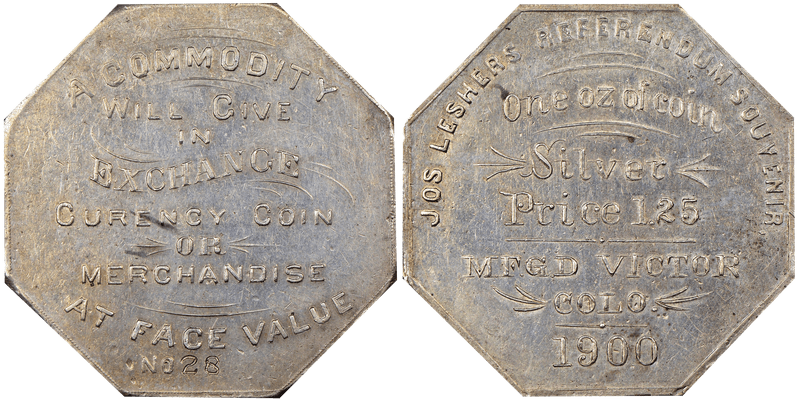
1900 Silver Lesher Dollar HK-787, A.B. Bumstead
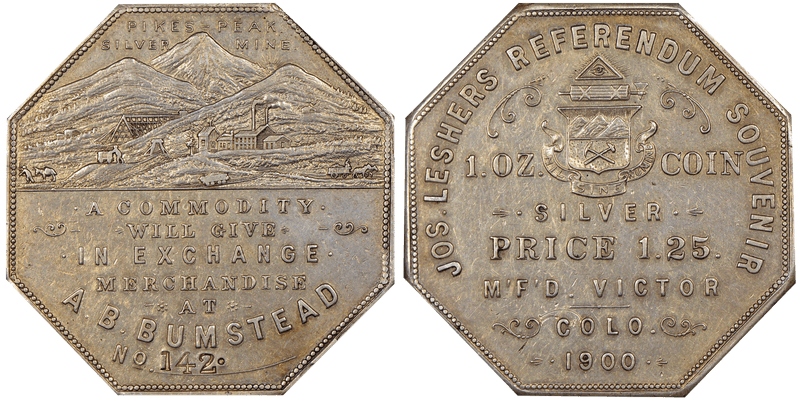
1900 Silver Lesher Dollar HK-788, A.B. Bumstead
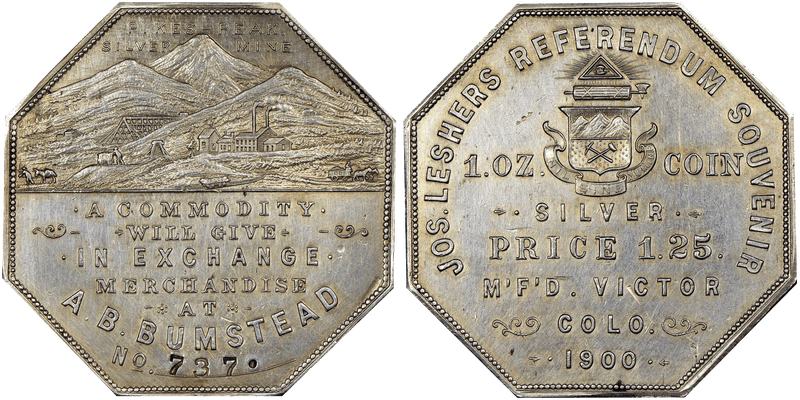
1900 Silver Lesher Dollar HK-789, C.D. Cowen
1900 Silver Lesher Dollar HK-789a, C.D. Cowen Variant
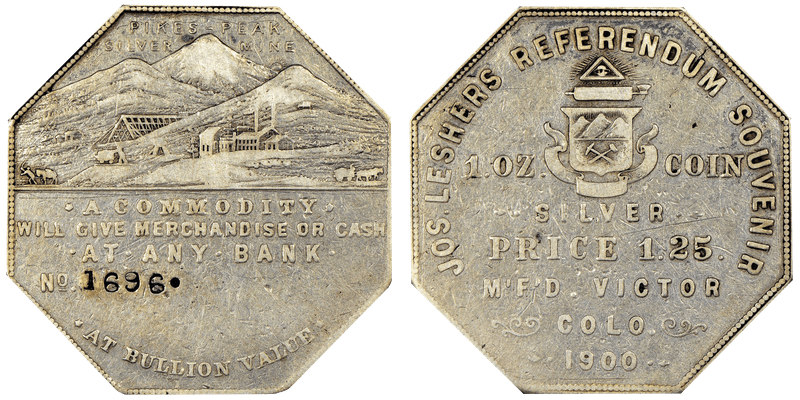
1900 Silver Lesher Dollar HK-790, C.A. Morris Druggist
1900 Silver Lesher Dollar HK-790a, C.A. Morris Variant
Collector Essentials
Tools and references for building and protecting your coin collection.
10x-20x Jeweler's Loupe
A must-have for examining coin details, mint marks, and surface quality
Red Book — Guide to U.S. Coins
The essential annual reference for U.S. coin values, history, and mintages
Coin Albums & Storage
Archival-quality albums and holders to protect and display your collection
USB Digital Microscope
Capture detailed images for documentation and community submissions
As an Amazon Associate, NumisDex earns from qualifying purchases.