
1896 Brass Bryan Money, Free Coinage "16 to 1"
Strike TypeCoin Details
Description
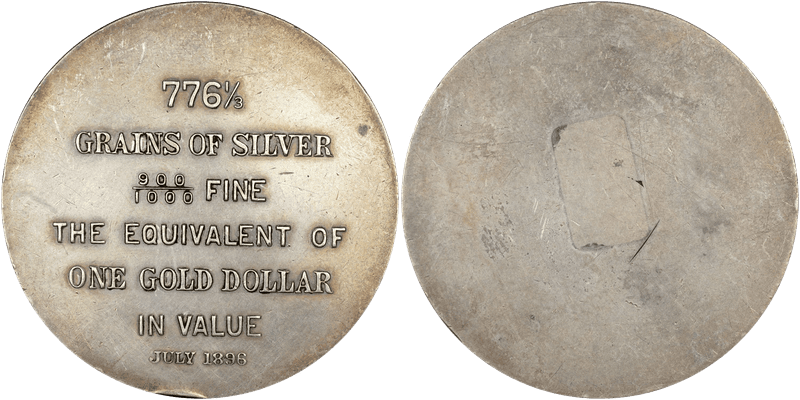
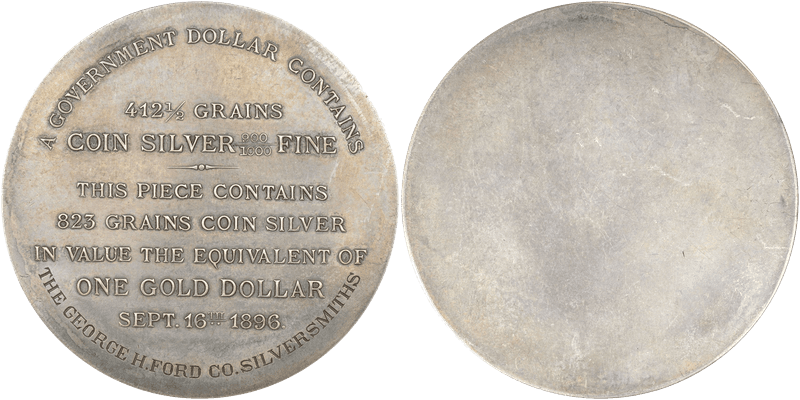
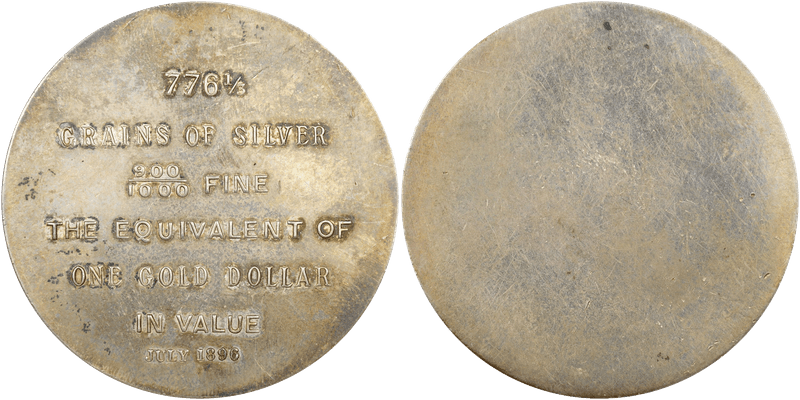
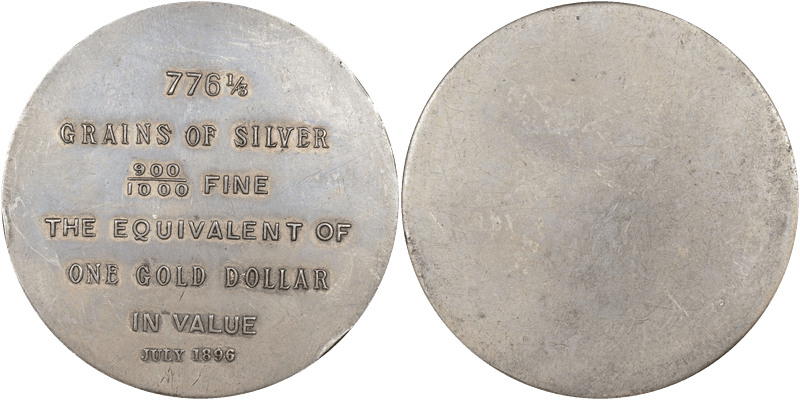
Cataloged in the Schornstein Bryan Money reference, this 1896 brass token bearing the "16 to 1" Free Coinage inscription documents the extraordinary volume of political material produced during the Bryan presidential campaigns. William Jennings Bryan, born March 19, 1860, in Salem, Illinois, delivered his legendary 'Cross of Gold' speech at the Chicago Coliseum on July 9, 1896, closing the platform debate on the third day of the Democratic National Convention. The relatively unknown Nebraska delegate electrified the hall and secured the Democratic nomination on the fifth ballot at age 36, becoming the youngest presidential nominee in American history. Bryan championed bimetallism at a ratio of sixteen ounces of silver to one ounce of gold, arguing that expanding the money supply through silver coinage would relieve the crushing debt burden on farmers and workers. The 'comparative' Bryan Dollars were struck in coin silver by prestigious Eastern silversmiths including Gorham Manufacturing Company of Providence, Rhode Island (founded 1831, the world's largest silver company), Tiffany & Co. of New York, Spaulding & Co., and the George H. Ford Company. These sophisticated, text-heavy pieces physically demonstrate the size a silver dollar would be under Bryan's 16-to-1 proposal, often showing the smaller contemporary Morgan dollar for comparison. The 'satirical' Bryan pieces were crudely cast in base metals with mocking slogans like 'In God We Trust, In Bryan We Bust' and 'United Snakes of America.' The so-called dollar collecting community has grown significantly since the Hibler-Kappen catalog's initial publication, with specialized dealers, dedicated reference works, and an active collector base supporting a market that values historical significance, artistic merit, rarity, and condition. Heritage Auctions, Stack's Bowers, and other major numismatic auction houses regularly feature so-called dollars in their sales.
Rarity Notes
Bryan Money tokens cataloged in the Schornstein reference vary widely in rarity. Many SCH-numbered varieties are rare, with only a handful of known examples for some numbers. The comprehensive Schornstein catalog includes hundreds of varieties, and assembling a complete collection represents a significant numismatic challenge.
External References
Error Varieties
No listings found
This category doesn't have any child listings yet.
Other Strike Types in This Series
Collector Essentials
Tools and references for building and protecting your coin collection.
10x-20x Jeweler's Loupe
A must-have for examining coin details, mint marks, and surface quality
Red Book — Guide to U.S. Coins
The essential annual reference for U.S. coin values, history, and mintages
Coin Albums & Storage
Archival-quality albums and holders to protect and display your collection
USB Digital Microscope
Capture detailed images for documentation and community submissions
As an Amazon Associate, NumisDex earns from qualifying purchases.