
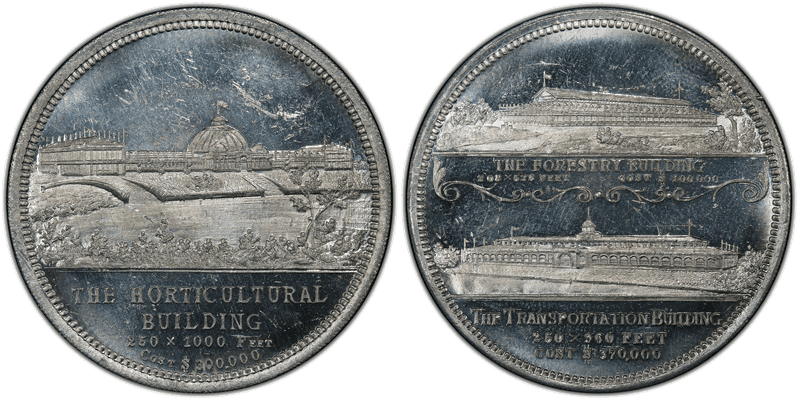
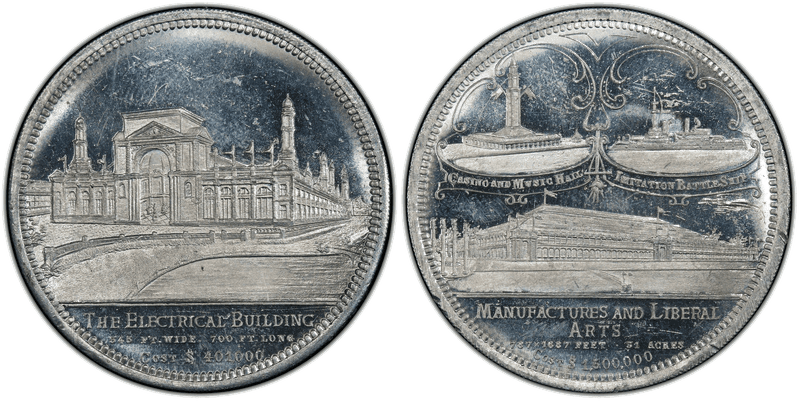
1892-1893 So-Called Dollar HK-186a, Horticultural Building
Strike TypeCoin Details
Description
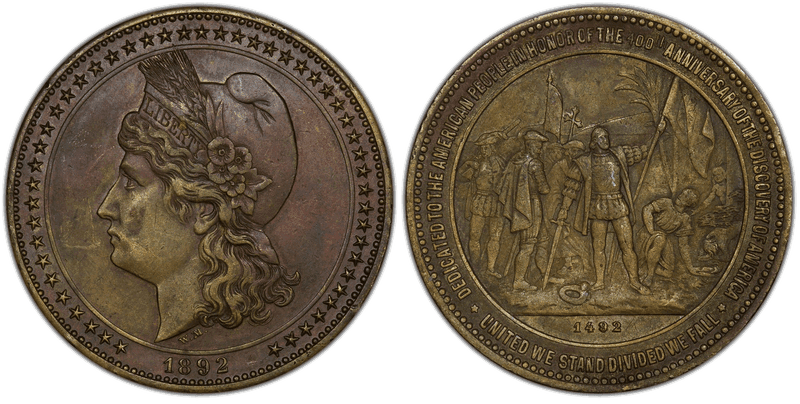
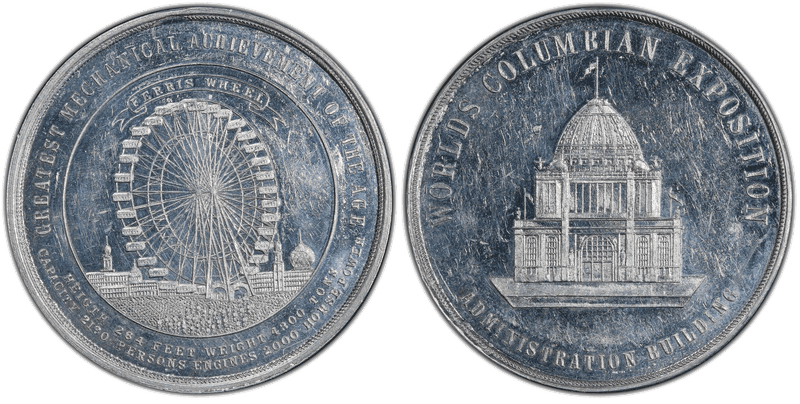
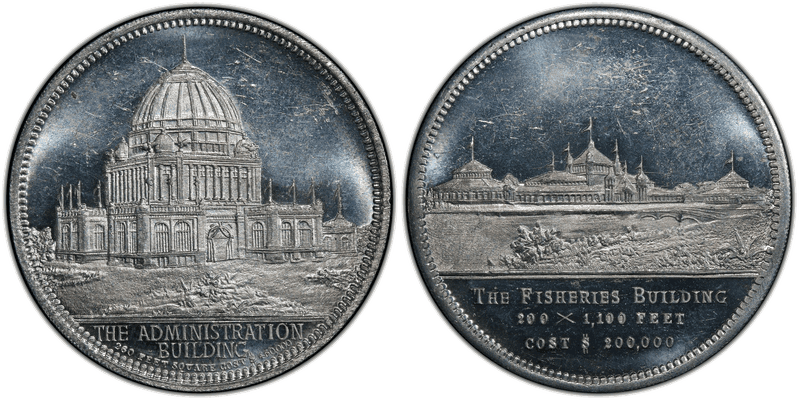
HK-186a is a 1892 so-called dollar commemorating Horticultural Building. The Columbian Exposition introduced Americans to alternating current electricity (demonstrated by Westinghouse and Tesla), the zipper, Cracker Jack, Juicy Fruit gum, and Pabst Blue Ribbon beer. Struck in bronze, this piece showcases the detailed die work typical of American commemorative medals. Bronze's natural patina gives aged examples an appealing warm-brown surface that collectors prize. Both the U.S. Mint and numerous private firms struck Columbian medals. Charles Barber designed official mint issues. The exposition also generated the first U.S. commemorative coins (Columbian half dollar). Charles Barber's tenure as Chief Engraver coincided with the golden age of American expositions, and he designed official U.S. Mint medals for the Columbian, Louisiana Purchase, and Panama-Pacific fairs. So-called dollars — defined as privately issued medals approximately the size of a silver dollar — encompass one of the most diverse and historically rich collecting fields in American numismatics. This piece is a variant of HK-186, distinguished by differences in composition, die state, or striking characteristics that merit a separate catalog entry in the Hibler-Kappen reference.
Rarity Notes
HK-186a is scarce in the numismatic market. Production quantities for Gilded Age commemorative medals were typically modest, and survival rates vary significantly based on the original distribution method and the material's durability.
Cross References
HK-186a; PCGS #642472; NGC #851466
External References
Error Varieties
No listings found
This category doesn't have any child listings yet.
Other Strike Types in This Series
Collector Essentials
Tools and references for building and protecting your coin collection.
10x-20x Jeweler's Loupe
A must-have for examining coin details, mint marks, and surface quality
Red Book — Guide to U.S. Coins
The essential annual reference for U.S. coin values, history, and mintages
Coin Albums & Storage
Archival-quality albums and holders to protect and display your collection
USB Digital Microscope
Capture detailed images for documentation and community submissions
As an Amazon Associate, NumisDex earns from qualifying purchases.