
1876 So-Called Dollar HK-30, Liberty Bell Dollar
Strike TypeCoin Details
Description
Designated HK-30 in the Hibler-Kappen catalog, this 1876 piece commemorates Liberty Bell. The 1876 Centennial Exposition in Philadelphia's Fairmount Park was the first official world's fair held in the United States, occupying 285 acres with over 200 buildings and attracting nearly 10 million visitors. Bronze examples of so-called dollars offer collectors an excellent balance of affordability, condition, and aesthetic appeal. The alloy's hardness produces sharp strikes with fine detail that survives handling better than softer metals. The U.S. Mint struck official Centennial medals designed by William Barber, while private firms produced hundreds of additional varieties. The Centennial group is the largest in the HK catalog. William Barber designed the official U.S. Mint medals for the 1876 Centennial Exposition, establishing the standard for American exposition medal artistry. The Hibler-Kappen catalog, first published in 1963 by Harold E. Hibler and Charles V. Kappen, systematically organized American so-called dollars for the first time, assigning HK numbers that remain the standard reference today.
Rarity Notes
So-called dollars from the post-Civil War era were produced in limited quantities for distribution at events or through numismatic channels. Examples of HK-30 are scarce, with surviving pieces ranging from well-worn pocket pieces to carefully preserved specimens.
Cross References
HK-30; PCGS #642078; NGC #850076
External References
Error Varieties
No listings found
This category doesn't have any child listings yet.
Other Strike Types in This Series
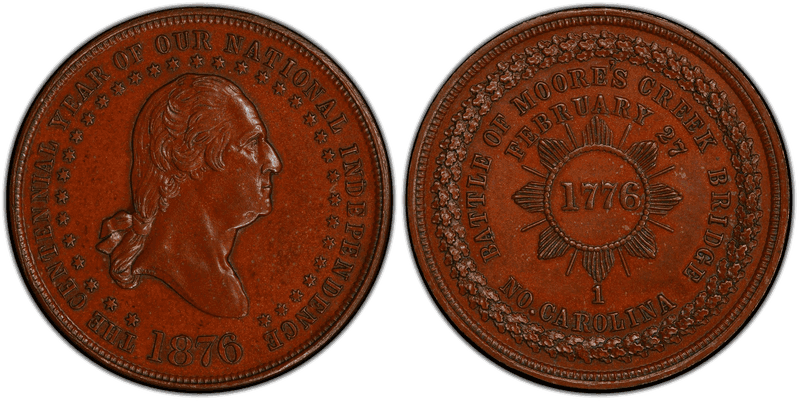
1876 Bronze So-Called Dollar GW-884, HK-91, Moore's Creek Bridge
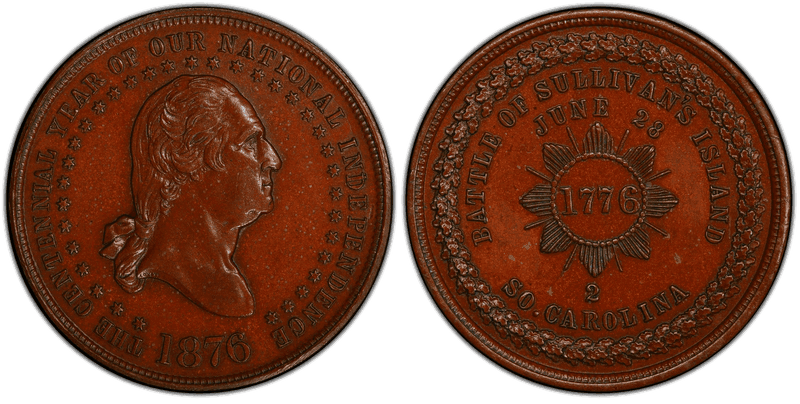
1876 Bronze So-Called Dollar GW-885, HK-94, Sullivan's Island
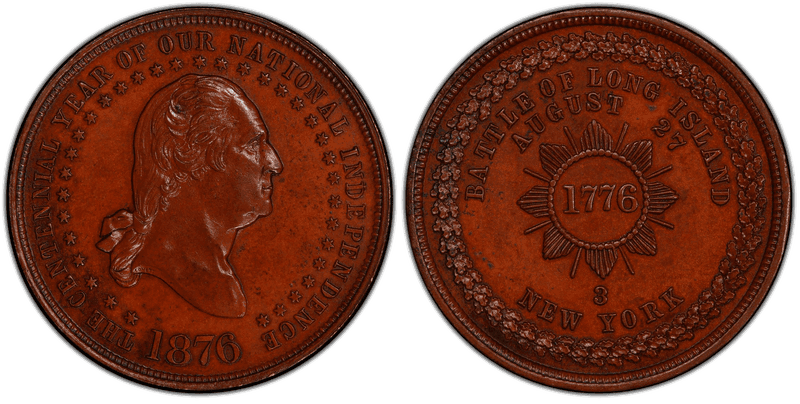
1876 Bronze So-Called Dollar GW-886, HK-97, Long Island
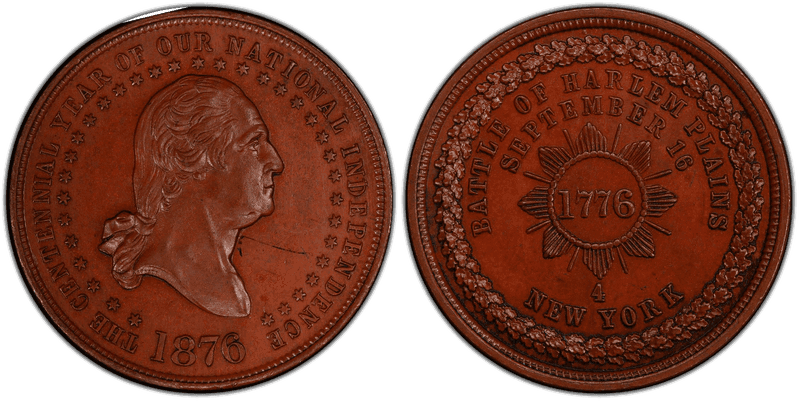
1876 Bronze So-Called Dollar GW-887, HK-100, Harlem Plains

1876 Bronze So-Called Dollar GW-888, HK-103, Lake Champlain
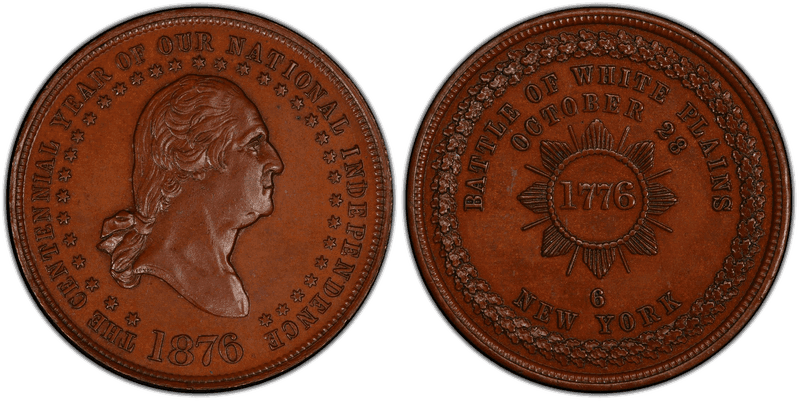
1876 Bronze So-Called Dollar GW-889, HK-106, White Plains
Collector Essentials
Tools and references for building and protecting your coin collection.
10x-20x Jeweler's Loupe
A must-have for examining coin details, mint marks, and surface quality
Red Book — Guide to U.S. Coins
The essential annual reference for U.S. coin values, history, and mintages
Coin Albums & Storage
Archival-quality albums and holders to protect and display your collection
USB Digital Microscope
Capture detailed images for documentation and community submissions
As an Amazon Associate, NumisDex earns from qualifying purchases.