
1867 Assay Commission Medal - JK-AC-3, Aluminum, Longacre Pattern
Strike TypeCoin Details
Description
The 1867 Assay Commission medal JK-AC-3 in aluminum is an experimental striking that reflects the Philadelphia Mint's fascination with this then-novel metal during the mid-nineteenth century. Aluminum was still a rare and expensive material in the 1860s — more costly per ounce than silver — and was prized for its remarkable lightness and bright silvery appearance. The Mint struck various pattern coins and medals in aluminum during this period as the metal's properties were being explored for potential numismatic applications. This aluminum JK-AC-3 carries the same Longacre design as the bronze and silver versions but exhibits the distinctive characteristics of aluminum striking: a brilliant white luster, exceptionally light weight in hand, and a slightly different quality of detail reproduction due to aluminum's unique flow properties under the press. The metal's resistance to tarnishing meant these pieces would maintain their bright appearance far longer than their bronze or silver counterparts. The production of Assay Commission medals in aluminum during the 1860s was part of a broader experimental program that also produced aluminum pattern coins in various denominations. These pieces were never intended for general distribution but rather served as metallurgical curiosities and presentation pieces for officials and collectors with connections to the Mint. Their survival rate is correspondingly low, making aluminum Assay Commission medals among the most sought-after variants in the series.
Rarity Notes
JK-AC-3 (1867) in aluminum. Aluminum was a semi-precious metal in the 1860s, and strikings in this composition are rare. Far scarcer than the bronze or silver versions.
Cross References
PCGS #972458; JK-AC-3; 1867 Assay Commission
External References
Error Varieties
No listings found
This category doesn't have any child listings yet.
Other Strike Types in This Series
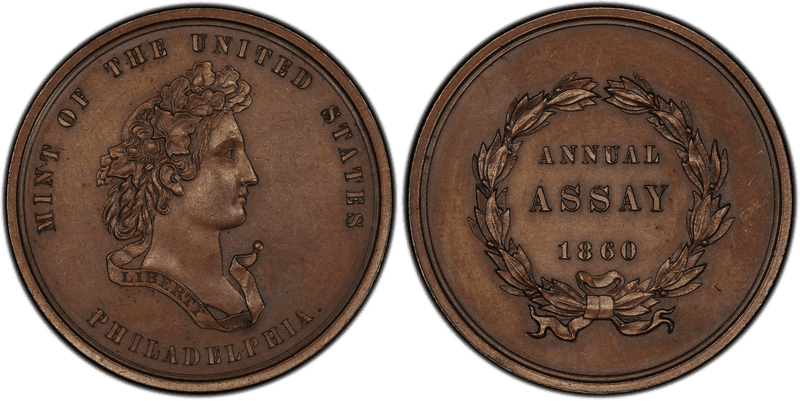
1860 Assay Commission Medal - JK-AC-1, Bronze, Longacre Pattern
1860 Assay Commission Medal - JK-AC-1, Copper, Longacre Pattern

1861 Assay Commission Medal - JK-AC-2, Copper, Longacre Pattern

1867 Assay Commission Medal - JK-AC-3, Bronze, Longacre Pattern
1867 Assay Commission Medal - JK-AC-3, Nickel, Longacre Pattern(Special Strike)

1867 Assay Commission Medal - JK-AC-3, Silver, Longacre Pattern
Collector Essentials
Tools and references for building and protecting your coin collection.
10x-20x Jeweler's Loupe
A must-have for examining coin details, mint marks, and surface quality
Red Book — Guide to U.S. Coins
The essential annual reference for U.S. coin values, history, and mintages
Coin Albums & Storage
Archival-quality albums and holders to protect and display your collection
USB Digital Microscope
Capture detailed images for documentation and community submissions
As an Amazon Associate, NumisDex earns from qualifying purchases.