
1814 Bronze Medal J-MI-17, Gen. James Miller
Strike Type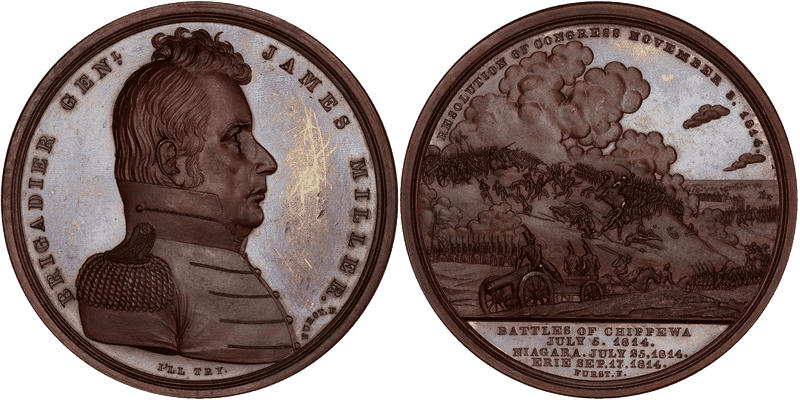
Coin Details
Auction Record
$528 SP65 03-25-2020 Stack's Bowers
Description
This bronze military medal (Julian MI-17) honors Brigadier General James Miller for gallantry at the Battles of Chippewa, Niagara (Lundy's Lane), and Erie during the War of 1812. Congress authorized the gold medal on November 3, 1814. The dies were engraved by Moritz Furst, with the reverse battle scene based on artwork by painter Thomas Sully. The 65mm medal was struck at the Philadelphia Mint in 1824, a decade after authorization — typical of the War of 1812 series. The obverse features Miller's portrait with "I'LL TRY" in the exergue, his famous reply to Major General Jacob Brown when ordered to capture British artillery at Lundy's Lane on July 25, 1814. Miller's 21st Infantry deployed within yards of the guns, fired a devastating volley, and followed with a bayonet charge that captured the entire British battery. The phrase became the motto of the 5th U.S. Infantry. Born in Peterborough, New Hampshire in 1776, Miller later served as the first Governor of Arkansas Territory (1819-1824), moving the capital from Arkansas Post to Little Rock. Daniel Webster presented him the gold medal at City Hall Park in New York. Bronze specimens from the original dies are official U.S. Mint productions.
Rarity Notes
Bronze strikes from original Furst dies produced at the Philadelphia Mint across three periods: early copper strikes (ca. 1825-1860) with proof-like surfaces are most desirable; copper-bronzed restrikes (1861-1900) under Director Snowden have mahogany finish; post-1901 bronze alloy strikes have sandblasted matte surfaces. NGC uses XRF analysis to distinguish periods.
Cross References
Julian MI-17; PCGS #784649; U.S. Mint Medal #414; Moritz Furst engraver; Thomas Sully reverse design
External References
Error Varieties
No listings found
This category doesn't have any child listings yet.
Other Strike Types in This Series
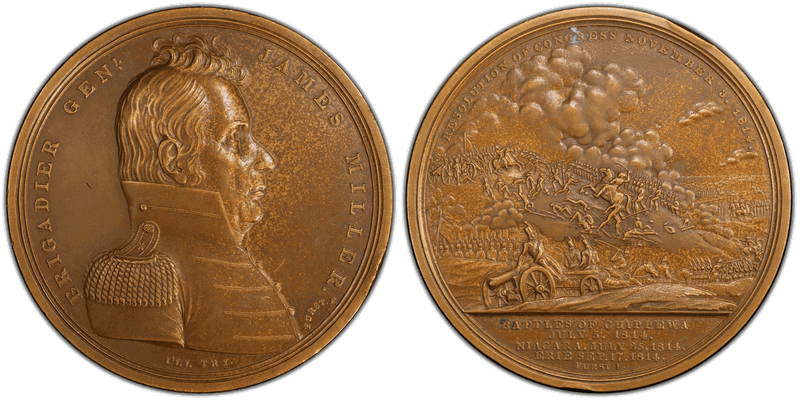
"1814" Bronze Medal J-MI-17, Gen. James Miller Modern Restrike
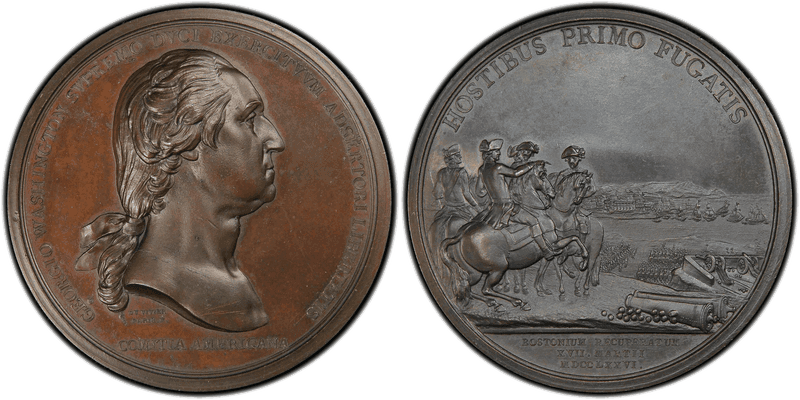
(1776) Bronze Medal J-MI-1, George Washington
(1777) Bronze Medal J-MI-2, Gilt, Gates at Saratoga
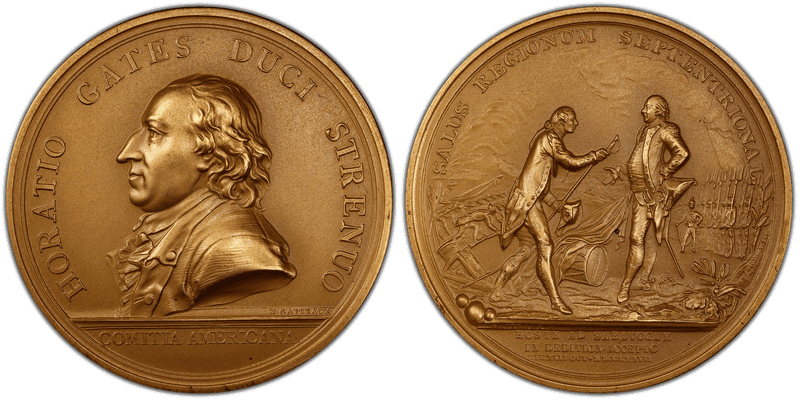
(1777) Bronze Medal J-MI-2, Modern Restrike Horatio Gates at Saratoga
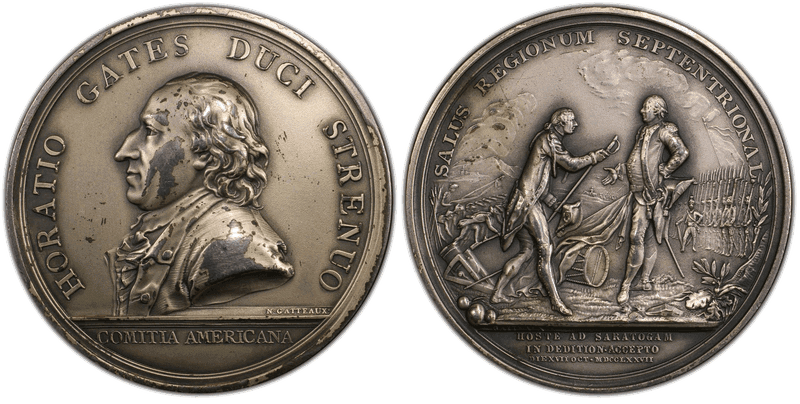
(1777) Silvered Bronze Medal J-MI-2, Horatio Gates at Saratoga

(1779) Bronze Medal J-MI-3, General Anthony Wayne
Collector Essentials
Tools and references for building and protecting your coin collection.
10x-20x Jeweler's Loupe
A must-have for examining coin details, mint marks, and surface quality
Red Book — Guide to U.S. Coins
The essential annual reference for U.S. coin values, history, and mintages
Coin Albums & Storage
Archival-quality albums and holders to protect and display your collection
USB Digital Microscope
Capture detailed images for documentation and community submissions
As an Amazon Associate, NumisDex earns from qualifying purchases.