
1796 Medal Indian Peace Medal Baker-171 The Farmer
Strike Type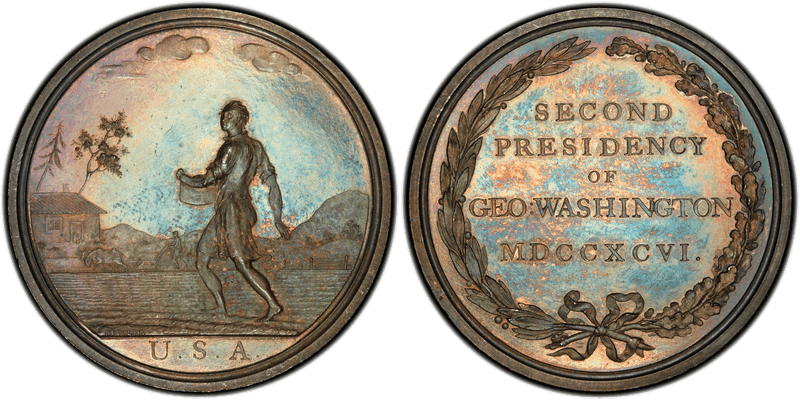
Coin Details
Description
The 1796 Indian Peace Medal Baker-171, "The Farmer," is the second in the three-part series of oval peace medals produced during George Washington's presidency. The Farmer design depicts an agricultural scene showing a figure engaged in farming activities — plowing, sowing, or harvesting — representing the cultivation of the land that the Washington administration promoted as part of its policy toward Native American nations. This agrarian theme reflected both the Jeffersonian ideal of the yeoman farmer and the practical goal of encouraging Native peoples to adopt settled agricultural practices. The Farmer medal was presented alongside The Shepherd and The Family designs to tribal leaders during treaty councils, where federal commissioners negotiated land cessions, trade agreements, and peace accords. The three designs collectively illustrated the domestic transformation that the United States government hoped to foster, with each medal depicting a different aspect of the idealized settled life: pastoral herding, crop farming, and family domesticity. George Washington himself was a lifelong farmer who operated the five farms of his Mount Vernon estate with close personal attention. His advocacy for scientific agriculture and crop rotation was well known, and the choice of farming as a central theme for the Indian peace medals reflected his own values as well as broader national policy. Baker-171 is valued by collectors for its combination of artistic merit, historical significance, and connection to Washington's personal identity as a farmer-statesman.
Rarity Notes
Original presentations in silver are extremely rare. Baker-171 is a key piece in the 1796 Indian peace medal series. Later restrikes and copies have been produced in various metals.
Cross References
Baker-171; PCGS #506321; Julian IP-4; Prucha-37
External References
Error Varieties
No listings found
This category doesn't have any child listings yet.
Other Strike Types in This Series
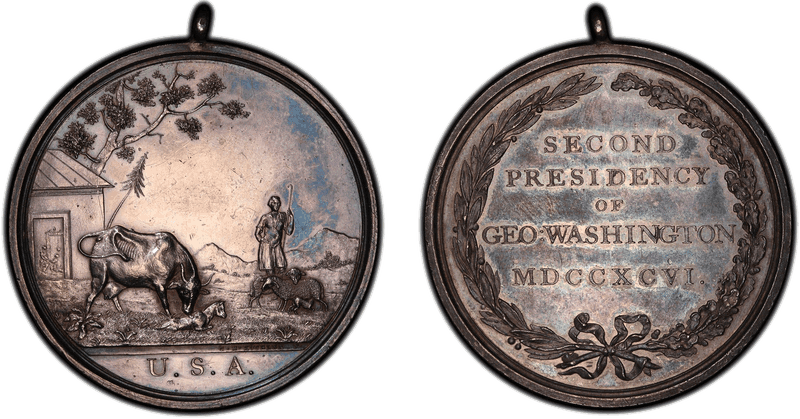
(1798) Medal J-IP-51, GW-67 Silver Season One, The Shepherd
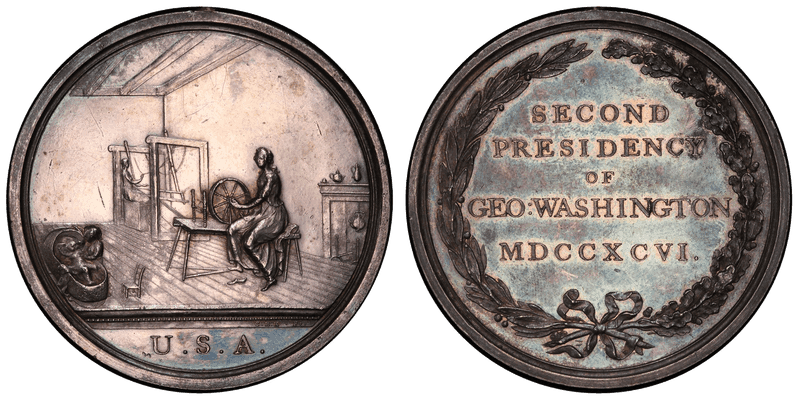
(1798) Medal J-IP-52, GW-69 Silver Mounted Season Three, The Home

1796 Medal Indian Peace Medal Baker-170 The Shepherd

1796 Medal Indian Peace Medal Baker-170A The Shepherd
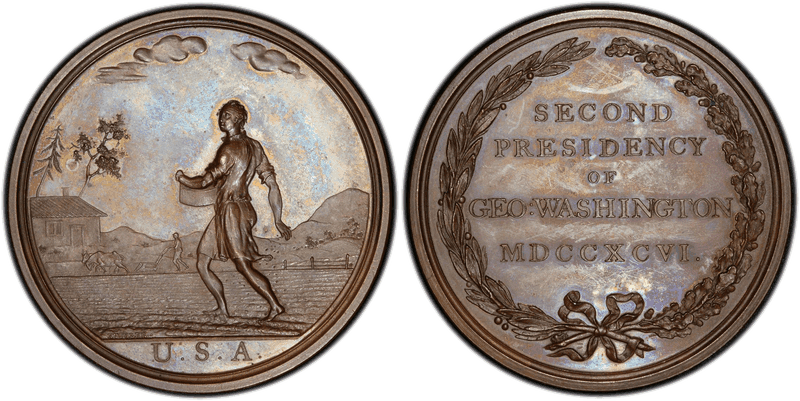
1796 Medal Indian Peace Medal Baker-171A The Farmer
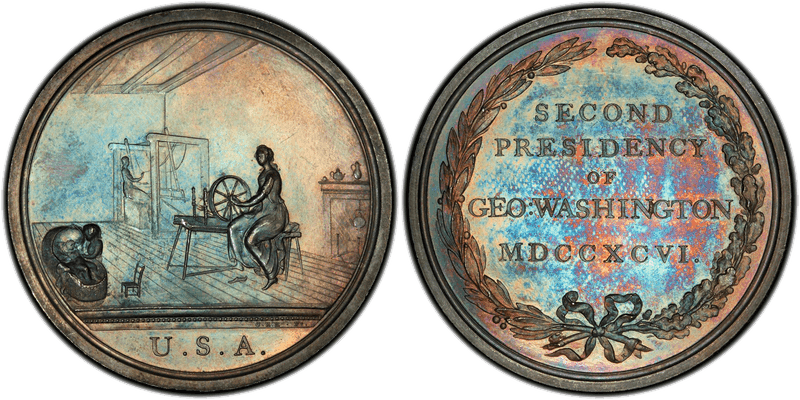
1796 Medal Indian Peace Medal Baker-172 The Family
Collector Essentials
Tools and references for building and protecting your coin collection.
10x-20x Jeweler's Loupe
A must-have for examining coin details, mint marks, and surface quality
Red Book — Guide to U.S. Coins
The essential annual reference for U.S. coin values, history, and mintages
Coin Albums & Storage
Archival-quality albums and holders to protect and display your collection
USB Digital Microscope
Capture detailed images for documentation and community submissions
As an Amazon Associate, NumisDex earns from qualifying purchases.