
1893 HK-168, Aluminum, Chicago World's Columbian Expo Dollar
Strike Type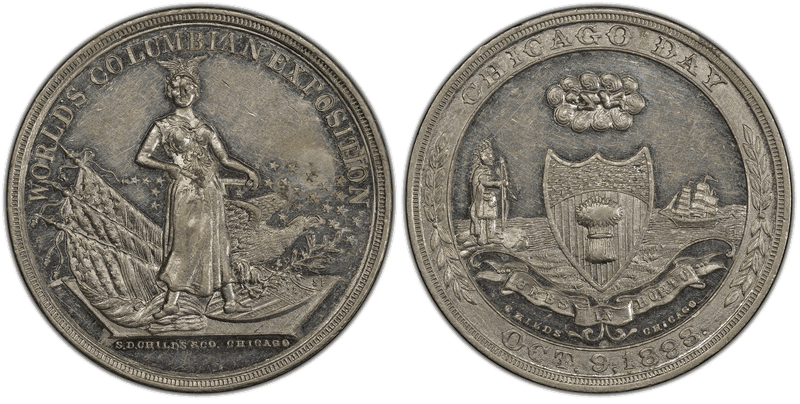
Coin Details
Auction Record
$288 MS63PL 02-03-2009 Goldberg Auctioneers
Description
The 1893 Chicago World's Columbian Expo so-called dollar (HK-168) is a commemorative piece from the World's Columbian Exposition series. The Columbian Exposition introduced Americans to alternating current electricity (demonstrated by Westinghouse and Tesla), the zipper, Cracker Jack, Juicy Fruit gum, and Pabst Blue Ribbon beer. The aluminum composition represents a modern departure from the traditional bronze, copper, and white metal palette of earlier so-called dollars. Aluminum's silvery-white appearance and durability made it practical for mass production. Both the U.S. Mint and numerous private firms struck Columbian medals. Charles Barber designed official mint issues. The exposition also generated the first U.S. commemorative coins (Columbian half dollar). Charles Barber's tenure as Chief Engraver coincided with the golden age of American expositions, and he designed official U.S. Mint medals for the Columbian, Louisiana Purchase, and Panama-Pacific fairs. Harold Hibler and Charles Kappen spent decades cataloging American dollar-sized medals, creating a reference work that transformed a scattered collecting field into an organized numismatic specialty.
Rarity Notes
HK-168 is moderately scarce in the numismatic market. Production quantities for Gilded Age commemorative medals were typically modest, and survival rates vary significantly based on the original distribution method and the material's durability.
Cross References
HK-168; PCGS #642444; NGC #850297
External References
Error Varieties
No listings found
This category doesn't have any child listings yet.