
(1892) Aluminum Token Rulau Co-Ca-5, Mule Knox Bros. / Grand Lodge of TX
Strike Type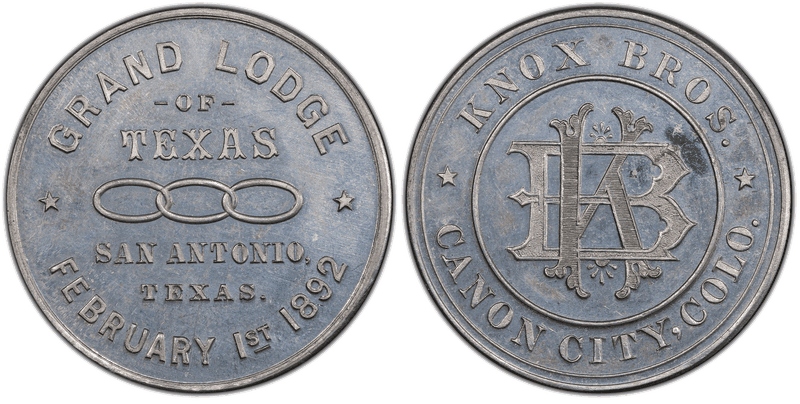
Coin Details
Description
Aluminum mule token combining dies from Knox Bros. of Colorado and the Grand Lodge of Texas, circa 1892. A mule token results from the accidental or deliberate pairing of an obverse die from one token with a reverse die from an entirely different token. The Knox Bros. die represents a Colorado merchant, while the Grand Lodge of Texas die is from a Masonic organization. The deliberate production of mule tokens for the collector market was a documented practice in the 1890s, particularly around the 1892 Knights Templar Twenty-Fifth Triennial Conclave held in Denver, Colorado, when Masonic and merchant dies were available in proximity. Aluminum was a novel and expensive metal in 1892, adding to the curiosity of this already unusual piece. Aluminum, 25mm. The late 19th century advertising revolution extended to tokens, with Gilded Age merchants using metal pieces as portable promotions in an era when commercial competition drove innovation in marketing.
Rarity Notes
Rare. Deliberately produced mule token combining Colorado merchant and Texas Masonic dies, an unusual hybrid that appeals to multiple collecting specialties. Aluminum tokens from the early 1890s are scarce, as aluminum was still an expensive metal at this date. Mule token specialists actively seek documented examples.
Cross References
Rulau Co-Ca-5; PCGS #911383
External References
Error Varieties
No listings found
This category doesn't have any child listings yet.