
(1863) Copper Civil War Store Card F-410K-1a, J. Rodermund WI
Strike Type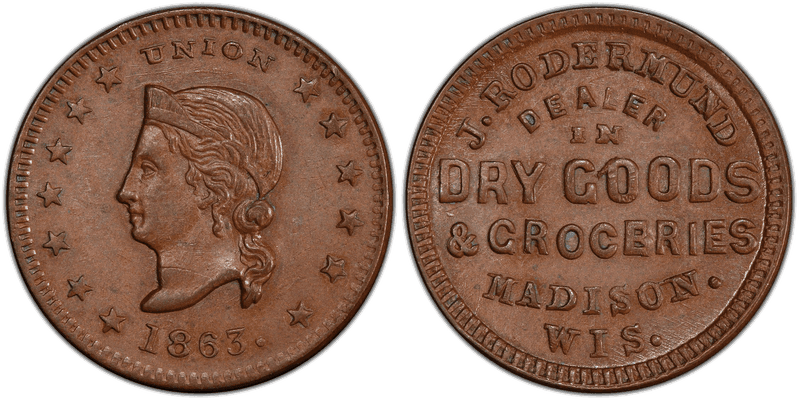
Coin Details
Description
Store card of J. Rodermund in Madison, Wisconsin, struck during the 1862-1864 token era. Wisconsin was a growing frontier state with Milwaukee as its largest commercial center, and its merchants issued tokens as practical solutions to the coin shortage. This copper striking (Fuld 410K-1a) is common among the known varieties. Die sinkers offered merchants a choice of metals, with copper being cheapest and most common, while silver and gold were struck for collectors. The token era ended when Congress authorized new federal small-denomination currency and criminalized private token production in 1864. The transition from large copper cents to small-diameter bronze cents in 1857 had already created a shortage mindset, making the public particularly anxious about coin supplies when war began. Over 25 million Civil War tokens were produced before Congress ended private coinage in April 1864, making them the largest private coinage movement in American history.
Rarity Notes
Copper strikings are generally the most common metal variant for Civil War store cards, as copper was the standard planchet material mimicking the federal cent. With 1 cataloged varieties, J. Rodermund was a limited producer of Civil War tokens.
Cross References
Fuld 410K-1a
External References
Error Varieties
No listings found
This category doesn't have any child listings yet.