
1854 Cent Pattern - J-160
Strike Type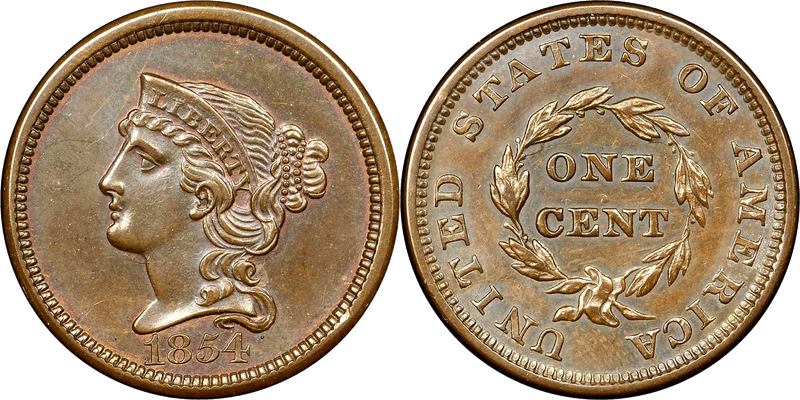
Coin Details
Description
Judd-160, Pollock-187, is a cent pattern from 1854 that brings the small-cent experimental program one year closer to its culmination. The obverse features the Flying Eagle design that James B. Longacre adapted from the soaring eagle created by Christian Gobrecht and Titian Peale for the 1836-1839 silver dollars. Thirteen stars surround the eagle in flight, with the date 1854 below. The reverse displays ONE CENT within a wreath composed of agricultural products. The 1854 date is significant because it marks the year when the Mint began producing pattern cents in sufficient quantity to distribute them to members of Congress and other officials whose support would be needed to change the coinage laws. Mint Director James Ross Snowden recognized that abstract arguments about copper costs and coin weights would be less persuasive than placing actual prototype coins in lawmakers' hands. The 1854-1855 Flying Eagle patterns served this lobbying function brilliantly — they were attractive, distinctive, and noticeably more convenient than the large copper cents they were designed to replace. J-160 belongs to the generation of patterns that refined the hook-neck eagle variant, in which the eagle's head is positioned with a pronounced downward curve at the beak. Later patterns would adopt a more naturalistic neck posture. The copper-nickel alloy used for most 1854 cent patterns produced a distinctive pale gold or silvery appearance that clearly differentiated the new coin from both the copper large cent and silver coinage, helping avoid denomination confusion.
Rarity Notes
R.6. Approximately 15-20 specimens survive.
Cross References
Judd-160; Pollock-187
External References
Error Varieties
No listings found
This category doesn't have any child listings yet.