
(1836) Token HT-143, Baltimore on 2 Reales MD
Strike Type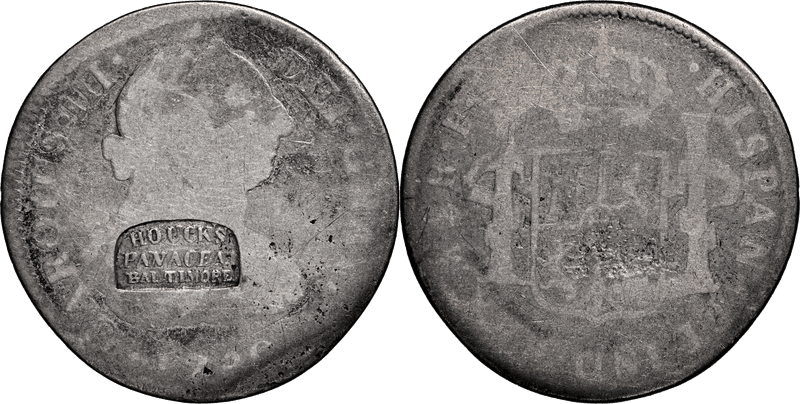
Coin Details
Description
This Houck's Panacea counterstamp on a Spanish colonial 2 reales (quarter-dollar equivalent) reflects the continued circulation of foreign silver coins in the American monetary system during the 1830s. Spanish colonial coins, particularly the 8 reales and its fractional denominations, remained legal tender in the United States until 1857 and circulated widely, especially in port cities like Baltimore where international trade brought foreign coinage into daily commerce. The 2 reales host coin, with its approximately 27mm diameter, provided a smaller canvas for the Houck's Panacea counterstamp than the half dollar or dollar hosts, but the stamp remained legible and effective as advertising. The smaller denomination also meant lower cost per advertising impression, potentially making 2 reales the most cost-effective host coin for Houck's promotional program. Baltimore's position as a major Atlantic port ensured a steady supply of Spanish colonial silver through trade with the Caribbean, Mexico, and South America. The city's commercial connections to the sugar and coffee trade routes of the West Indies brought particularly large quantities of Spanish fractional silver, making 2 reales pieces common in Baltimore's retail marketplace and natural candidates for Houck's counterstamping operation.
Rarity Notes
Scarce. The 2 reales host is less common than Capped Bust half dollar hosts. Rarity R-4.
Cross References
Rulau HT-143; Brunk H-768
External References
Error Varieties
No listings found
This category doesn't have any child listings yet.